Menu
لوگو دماتجهیز

Advantages and Disadvantages of All Air Conditioning System Types

If you are looking to choose the best air conditioning system for your building, this article gives you everything at a glance. From split and ducted split systems to chillers, fan coil units, VRF, air handling units, evaporative coolers, air washers, and cooling towers, here is a thorough review of the advantages and disadvantages of each system to make your decision easier and more reliable.
Last Updated Date
27 August 2025
Author
محسن سیفی

All residential, office, commercial, and industrial buildings require an appropriate air conditioning system to balance indoor temperature, regulate relative humidity, reduce pollution, and more throughout the year. Today, a variety of HVAC equipment is designed and manufactured, each capable of creating a comfortable indoor environment depending on the climate conditions and building requirements.
Air conditioning equipment plays a crucial role in energy consumption. One of the most important strategies for reducing energy usage while maintaining comfort is selecting the right system for each project, which depends on factors such as precise geographic and climate calculations, building use, and more. Additionally, choosing the appropriate HVAC system requires knowledge of the equipment and familiarity with the advantages and disadvantages of each type.
This article covers the pros and cons of all the various types of air conditioning systems. Keep reading to get a concise yet comprehensive overview of the advantages and disadvantages of different HVAC types.

HVAC Types and their Pros and Cons

Advantages and Disadvantages of Fan Coil Units

Fan coil units (FCUs) are a common component in HVAC systems, regulating the temperature of each space using hot or chilled water coils and an internal fan. FCUs are available in wall-mounted, ceiling-mounted, floor-mounted, or cassette types and are highly practical for controlling the temperature of each room or zone.

Advantages of Fan Coil Units

All air conditioning systems include some advantages and some disadvantages, which you are now here to review. The advantages of Fan Coil Units are:

  1. Temperature Independence: Each room or zone can have its own thermostat.
  2. High Comfort Level: Quiet operation with optimal temperature for each zone.
  3. Variety of Models: Selection can be based on installation conditions and interior design.
  4. Energy Efficiency: Only operates when conditioning is needed in the space.
  5. Integration with Chiller or Mini-Chiller: Suitable for small to large projects.

Disadvantages of FCUs

Among the disadvantages of FCU, the following are worth mentioning.

  1. Extensive Piping Required: Chilled and hot water pipes need to be installed throughout the building.
  2. Maintenance Costs: Requires filter cleaning and periodic service.
  3. No Fresh Air Supply: FCU only circulates indoor air; fresh air requires an AHU.
  4. Dependence on Central Source: Cannot operate without a chiller or mini-chiller.

Advantages and Disadvantages of Split ACs

Split systems are among the most widely used air conditioning systems in residential, office, and some commercial spaces. They are popular due to their simple design, adequate efficiency, and easy installation. However, like any equipment, they have specific pros and cons.

Advantages of Split ACs

To say in brief, in general, the advantages of split ACs are:

  1. Zone-Specific Temperature Control: Each space can be individually adjusted.
  2. Low Maintenance Costs: Genuine, properly installed units can operate problem-free for years.
  3. Energy Efficiency: With zoning, unused areas can be turned off while others remain active.
  4. Cooling and Heating Functions: Some splits are dual-purpose for year-round use.
  5. Dehumidification: The Thermodynamic cycle allows for humidity reduction.
  6. Variety in Capacity and Pricing: Different models and capacities provide multiple price options.

Disadvantages of Split AC Systems

Among the disadvantages of the Split AC Systems, the following can be mentioned.

  1. Multiple Condensers: Each split has an outdoor unit, which can lead to congestion on rooftops or façades in large buildings.
  2. Limitations in Modern Architecture: Built-in units are often preferred, making wall-mounted indoor panels less ideal.

Pros and Cons of Ducted Split ACs

Ducted split systems are very popular in residential and office units and are installed hidden in a false ceiling. They offer independent cooling and heating for each unit and can connect to hot water coils, making them especially popular in Iran. Like any system, they also have pros and cons.

Advantages of Ducted Split ACs

Among the advantages of Ducted Split ACs, the following can be mentioned.

  1. Rapid Air Distribution: Allows fresh air intake alongside cooling and heating.
  2. Independent Energy Consumption: Each building unit can have a separate system, managing energy independently.
  3. Low Maintenance: With proper sizing and ducting, maintenance costs are minimal and usually require annual service only.

Disadvantages of Ducted Split AC

The disadvantages of the Ducted Split AC system are as follows.

  1. No Temperature Independence per Room: Usually, all rooms reach the same temperature with no individual control.
  2. Fan Noise: Internal unit noise in the false ceiling, especially in higher capacities, can be disturbing.
  3. Ceiling Space Consumption: Installation requires sufficient duct space, and return air vents must be placed in rooms.

DamaTajhiz; The First Specialized Reference for Selection and Pricing of HVAC and Building Equipment (Since 2004)

Air Handling Units (AHU) Pros and Cons

The AHU is a core component of central HVAC systems, responsible for supplying, distributing, and filtering fresh air. AHUs are frequently installed in the mechanical room or dedicated spaces and can be integrated with chillers, boilers, and fan coil units.

Pros of Air Handling Units

The most important advantages of air handling units, also called AHUs, are:

  1. Provides Fresh and Filtered Air: improves air quality and removes contaminants via various filters
  2. Temperature and Humidity Control: cooling and heating coils allow precise adjustment
  3. Integration with Large Systems: can be connected to chillers, boilers, and building ductwork
  4. Design Flexibility: allows installation of various filters, humidifiers, and dampers

Disadvantages and Cons of AHU

Among the disadvantages of the AHU air conditioning systems, the following can be mentioned.

  1. Requires Installation Space: typically large and heavy, needing adequate room in the mechanical area or a large false ceiling
  2. Relatively high Initial Cost and Maintenance
  3. Higher Energy Consumption: fans and coils consume more energy than smaller systems
  4. System Complexity: operation and control require expertise and careful planning

pros and cons of AHU

Advantages and Drawbacks of Compression Chillers

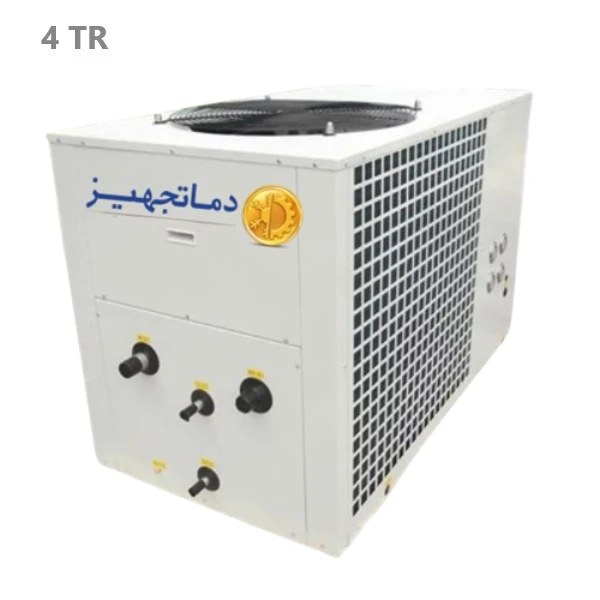
Compression chillers are among the main central air conditioning systems for medium to large buildings. The water-cooled type of compression chillers cool water and distribute it via fan coil units or air handling units, providing uniform and controllable cooling. Compression chillers are available in two types: water-cooled and air-cooled chillers, with the choice depending on project requirements.

Advantages of Compression Chillers

Compression chillers include numerous advantages; the boldest of which are:

  1. Temperature Independence across Zones: When combined with FCUs, each building zone can have an adjustable temperature.
  2. High Efficiency: Especially in large projects and hydronic systems.
  3. Long Lifespan and Serviceability: With proper maintenance, reliable operation can be achieved for many years.
  4. Connectable to AHU and FCU: Allows precise control of temperature and even humidity.
  5. Design Flexibility: Option to use a cooling tower or air condenser depending on project conditions.

Compression Chillers's Drawbacks

Like every other MEP equipment, compression chillers have some drawbacks: the most critical of which include:

  1. High Initial Cost: Includes purchase, piping, and plant room installation.
  2. Space Requirements: Need for a mechanical room or adequate condenser area.
  3. Water Consumption in Water-Cooled type: water-cooled compression chillers require a cooling tower and water treatment.
  4. Need for Skilled Team: Operation and maintenance must be carried out by professionals.
  5. Not Suitable for Small Projects: Due to high cost and large footprint, it is not economical.

VRF/VRV Air Conditioning HVAC System Pros and Cons

VRF (Variable Refrigerant Flow) or VRV systems are an advanced generation of central split systems using inverter technology. They allow multiple indoor units to connect to a single outdoor unit.

Advantages and Pros of VRF/VRV

VRF and VRV air conditioning systems come with many advantages and pros; for example:

  1. Very Low Energy Consumption: due to inverter technology
  2. Independent Temperature Control: in each unit
  3. Flexible Installation: for large and modern buildings

VRF/VRV Air Conditioning HVAC Systems and Cons

The followings are three cons and drawbacks for VRV and VRF air conditioners:

  1. Very High Initial Cost: in comparison with other types of split ACs
  2. Requiring Skilled Technicians: for installation and maintenance
  3. Being more Sensitive: in extremely hot or humid climates
DamaTajhiz HVAC Co.; Engineering, Manufacturing, and Trading Company in the Middle East Since 2004
Review, Selection, and Pricing of HVAC Equipment

Advantages and Disadvantages of Mini Chillers

Mini chillers are small-scale central chillers designed for medium and small projects. In fact, mini chillers produce chilled water and distribute it to fan coil units, providing uniform cooling and heating, making them a more economical option compared to large chillers.

 Mini Chillers Advantages

Mini chillers are so popular among HVAC engineers, because of the following advantages:

  1. Suitable for Medium-Sized Buildings and Small Projects: which are more than huge projects in number
  2. Independent Temperature Control: for each space via connection to FCUs
  3. Faster Installation and Commissioning: compared to central chillers
  4. More Energy-Efficient: than multiple split units

Disadvantages of Mini Chillers

The disadvantages of a mini chiller can be:

  1. Lower Capacity: than central chillers, not suitable for large projects
  2. Necessitating Chilled and Hot Water Piping: in the building
  3. Needs Periodic Maintenance.
  4. No Direct Use: without FCU or AHU

Pros and Cons of Industrial Evaporative Coolers

Industrial evaporative coolers are systems that reduce ambient temperature using air flow and water evaporation. industrial evaporative coolers are commonly used in large halls, factories, and industrial spaces, offering relatively low energy consumption.

Pros of Industrial Evaporative Coolers

Have you ever wondered why evaporative coolers, especially the industrial ones, are still popular while many advanced air conditioning equipment types have been invented? Here are the reasons:

  1. Low Energy Consumption: less electricity compared to conventional cooling systems
  2. Affordable Installation and Maintenance: simpler and cheaper than complex cooling systems
  3. Being Suitable for Open or Industrial Spaces: ideal for large halls and workshops
  4. Easily Providing Fresh Air: continuous direct airflow ensures air renewal

Cons of Industrial Evaporative Coolers

Like all other types of air conditioning systems, evaporative coolers have some cons. Still, they are worth that:

  1. Less Effective in Humid Regions: performance drops in high humidity
  2. Continuous Water Requirement: significant water consumption, requiring filtration or treatment
  3. Installation Space and Ducting: proper ducting needed for large spaces
  4. Filter and Pump Maintenance: regular servicing is essential for optimal performance

Advantages and Disadvantages of Air Washers

Air washers are industrial HVAC air conditioning systems that provide cooling, heating, and air purification simultaneously. Air washer HVAC equipment use water and special filters to control humidity and air pollution, delivering fresh and clean air to the environment.

Advantages of Air Washers

In general, the advantages of Air Washers are:

  1. Simultaneous Cooling, Heating, and Humidity Control: complete environmental comfort with a single system
  2. Air Filtration and Purification: effectively removes dust and contaminants
  3. Energy-Efficient: consumes less energy compared to separate combined systems
  4. Suitable for Industrial and Commercial Places: ideal for halls and factories requiring clean air and HVAC

Disadvantages of Air Washers

To be brief; these four factors are the boldest disadvantages that an air washer can have:

  1. Continuous Water Supply and Maintenance Requirment: water consumption and periodic servicing are essential for proper operation
  2. Higher Initial Cost: more expensive to purchase and install compared to simpler systems
  3. Significant Installation Space: device size and auxiliary equipment require adequate space
  4. System Complexity: operation and maintenance require skilled personnel

Pros and Cons of Cooling Towers

Cooling towers are devices that cool hot water discharged from chillers or industrial systems through partial water evaporation, reducing its temperature. Cooling towers are used alongside central chillers, industrial systems, and large HVAC setups.

Pros of Cooling Towers

Cooling towers are frequently used because of the following advantages they have:

  1. Increasing Chiller Efficiency: cooling the outgoing water improves overall system performance
  2. Energy Savings: lower temperature of water entering the chiller reduces electricity consumption
  3. Suitability for Large and Industrial Projects: capable of handling high water and heat loads
  4. Durability and Long Lifespan: With proper maintenance, they have a long service life

Cons of Cooling Towers

Generally, you'd better consider following coins before choosing a cooling tower:

  1. High Water Consumption: requires a continuous water supply and treatment system
  2. Large Installation Space: typically installed outdoors with sufficient height
  3. Maintenance Required: periodic cleaning of deposits, surfaces, and pumps is essential
  4. Noise and Airflow: fan operation and air movement may cause noise and wind effects in the vicinity

pros and cons of all air conditioning systems

Pros and Cons of All Air Conditioning Systems at a Glance

HVAC systems play a critical role in providing thermal comfort, humidity control, and improving indoor air quality. Choosing the right system depends on building type, climate conditions, budget, and usage requirements, optimizing energy efficiency and enhancing occupant comfort.

Summary of Advantages and Disadvantages of Each HVAC System

This article reviewed the main HVAC systems, including: Split, Ducted Split, Compression Chiller, Fan Coil, Mini Chiller, VRF/VRV, AHU, Industrial Evaporative Cooler, Air Washer, and Cooling Tower.

  1. Split AC Unit: Suitable for small to medium spaces, easy installation, independent temperature control, but limited in modern architecture, and requires an outdoor unit.
  2. Ducted Split: Ideal for concealed and false ceiling installations, provides uniform air, but independent room temperature control is difficult, and ductwork is required.
  3. Compression Chiller & Fan Coil: For large, multi-zone buildings, high efficiency, but high installation and maintenance costs, and requires mechanical room space.
  4. Mini Chiller: Suitable for medium projects, independent temperature control, quick installation, but limited capacity, and requires piping.
  5. VRF/VRV: Advanced, very low energy consumption, precise zone control, but high initial cost, complex maintenance, and requires skilled technicians.
  6. AHU: Provides fresh and filtered air, temperature and humidity control, but requires installation space and higher energy consumption.
  7. Industrial Evaporative Cooler: Economical, low electricity consumption, suitable for large halls, but less effective in humid areas and high water consumption.
  8. Air Washer: Provides cooling, heating, and air purification simultaneously, suitable for industrial spaces, but high initial cost and maintenance.
  9. Cooling Tower: Increases chiller efficiency, suitable for large projects, but requires outdoor space, water supply, and periodic maintenance.

The following table is a brief summary of what you learned in this article about all advantages and disadvantages of any type of air conditioning sysmems in HVAC equipment.

HVAC System Advantages Disadvantages
Split Easy installation, independent temperature control in each space, suitable for small to medium areas Requires an outdoor unit, limitation in modern architecture, occupies part of the wall
Ducted Split Concealed and suitable for false ceilings, provides uniform air distribution throughout the space Independent room temperature control difficult, requires ductwork, medium installation cost
Compression Chiller High efficiency, suitable for large buildings, can connect to fan coils and AHUs High installation and maintenance cost, requires a mechanical room, water consumption for water-cooled type
Fan Coil Temperature control in each zone, high comfort, variety of models and installation options Requires extensive piping, filter maintenance, does not supply fresh air
Mini Chiller Suitable for medium projects, quick installation, independent temperature control Lower capacity than central chiller, requires piping, needs periodic maintenance
VRF/VRV Low energy consumption, precise control of each zone, flexible installation High initial cost, requires skilled technician, sensitive to extreme weather conditions
Air Handling Unit (AHU) Provides fresh and clean air, temperature and humidity control, can integrate with large systems Requires installation space, high initial cost, and energy consumption, complex to operate
Industrial Evaporative Cooler Low energy consumption, easy installation and maintenance, suitable for halls and industrial spaces Poor performance in humid areas, requires continuous water supply, requires ducting
Air Washer Simultaneous cooling, heating, and filtration, suitable for industrial and commercial spaces High initial cost, requires water and continuous maintenance, and considerable installation space
Cooling Tower Increases chiller efficiency, saves energy, suitable for large projects High water consumption requires a large installation space, periodic service and maintenance, noise, and airflow

DamaTajhiz: Thousands of products for thousands of projects (since 2004)

Now, with this information, you can easily determine which HVAC system is best suited for your building and its intended use. Naturally, your project budget is also a crucial factor. We hope we have provided you with useful insights.
DamaTajhiz Specialized Group, as the first and most reliable reference for purchasing building HVAC equipment and all air conditioning systems since 2004, with three valid business licenses, offers all products with guaranteed authenticity, after-sales service, and reliable warranty.
You can order any HVAC and MEP products, including different types of air washers, cooling towers, air handling units, chillers, industrial evaporative coolers, air curtains, burners, cast-iron or steel boilers, heat exchangers, gas heaters, unit heaters, circulation pumps, sand filters, water and fuel storage tanks, and more, from countries such as the UAE, Armenia, Tajikistan, Georgia, Azerbaijan, Turkey, Oman, Pakistan, Turkmenistan, Afghanistan, Iraq, and others across Asia, the Middle East, and Europe, and have them delivered to your city in the shortest possible time.
For more information, including a free professional consultation, please contact DamaTajhiz Engineering & Manufacturing Company experts at: +98-930-288-0251. For convenience, you can also click the WhatsApp button to send a text or voice message and receive guidance and advice directly via WhatsApp.

"Knowledge Fuels Better Choices"
business license
Registered Trademark and Stewardship Business Licenses Issued by the Union of Virtual Business Association and the HVAC Equipment Industry.
damatajhiz hvac awards
DamaTajhiz HVAC Participation at International HVAC and Construction Facilities Exhibitions Demonstrates its Global Reach and Commitment to the Industry.

Damatajhiz HVAC direct call line


We Look Forward to Your Call and the Opportunity to Meet With You

SHARE THIS CONTENT TO SPREAD THE KNOWLEDGE

whatsapp تلگرام instagram linkedin twitter
Without Comment
توضیحات ارسال به سراسر کشور
Fast shipping nationwide
راهنمای Installment purchase
Secure payment
شرایط ضمانت بازگشت کالا
Valid warranty
شرایط After-sales service محصولات
After-sales service
Address

Head Office: No. 463,Talebian Alley,Taleghani St.Tehran,Iran

لوگو شرکت دماتجهیز
گواهینامه های شرکت دماتجهیز

DamaTajhiz has provided the opportunity to sell and ship specialized HVAC equipment for applicants in the following countries as the first and the most popular online store for selling HVAC equipment (Heating , Ventilation , Cooling , Air conditioning) in the Middle East : Afghanistan – Tajikistan - Uzbekistan – Turkmenistan – Azerbaijan – Armenia – Georgia – Turkey – Iraq – Syria – Jordan – Kuwait – Emirates – Qatar – Oman.

Social Media:
واتساپ دماتجهیزآپارات دماتجهیزلینکدین دماتجهیزیوتیوب دماتجهیزاینستاگرام دماتجهیز
© 2000-2025, All Rights Reserved
Damatajhiz WhatsApp