
Pool Filtration Pump
A pool water pump is one of the most critical components of a filtration system. Selecting the right pump based on water volume, pool type, and application plays a key role in improving water quality. In the following, we will review technical specifications, types, and how to choose a pool filtration pump.
Professional Guide to Selecting and Pricing Pool Filtration Pump
The pool filtration pump, as the main component of the water circulation system, plays a decisive role in A pool pump, as the core of the water circulation system, plays a decisive role in filtration efficiency, water clarity, and the stable operation of treatment equipment. The pump is responsible for providing the required pressure to circulate water through the system and overcome pressure losses across piping, filters, heat exchangers, and other components.
An incorrect pump selection can lead to reduced water quality and cleanliness, as well as increased energy consumption and premature equipment wear.
In general, pool filtration pumps are available in various types based on motor power, flow rate, head (pressure), inlet and outlet sizes, single-speed or multi-speed operation, and application type (residential or commercial). Each type is designed for specific conditions and should be selected based on technical calculations and operating requirements.
For example, pumps with higher head are used in systems with longer piping routes or more equipment, while pumps with higher flow rates are suitable for larger pools or applications requiring faster water circulation.
In this professional guide, in addition to introducing different types of pool filtration pumps, we will examine the key parameters affecting their selection, enabling precise and optimized choices tailored to each pool.
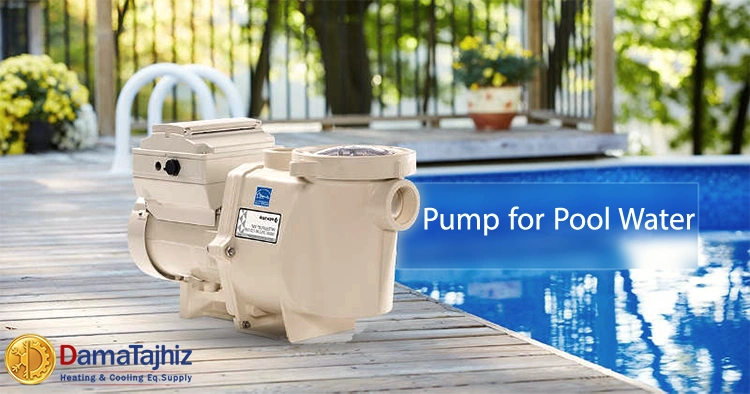
In general, pool filtration pumps are available in various types in terms of motor power, flow capacity, head, inlet and outlet size, single-speed or multi-speed operation, and application type (residential or public pools). Each type is designed for specific conditions and should be selected based on technical calculations and operating requirements. For example, pumps with higher head are suitable for systems with long piping routes or more equipment, while pumps with higher flow rates are ideal for larger pools or those requiring faster water circulation.
In this professional guide, in addition to introducing different types of pool filtration pumps, we examine key parameters affecting pump selection to ensure accurate, optimal, and technically appropriate choices for each pool.
What is a Pool Filtration Pump?
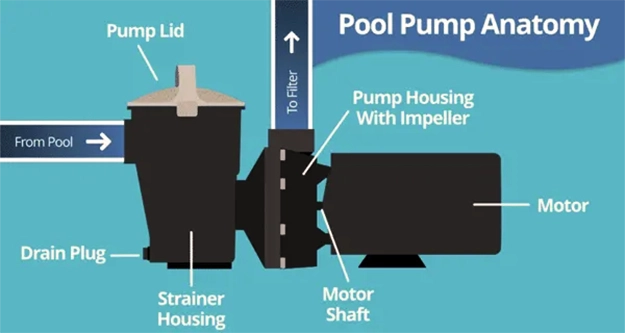
In general, a pool filtration pump is a centrifugal pump with an integrated strainer that continuously creates the pressure difference required to circulate water in the filtration circuit. Coupled directly to an electric motor, it transfers kinetic and pressure energy to the fluid via the impeller to:
- Draw water from skimmers and the main drain,
- Pass the water through the strainer basket to remove large particles before entering sand, cartridge, or diatomaceous filters,
- Return the treated water to the pool through return nozzles,
- Selecting the appropriate pump capacity depends on factors such as pool volume and usage. Typically, the pump should be capable of circulating the entire pool water within 6 to 8 hours. Continuous 24-hour operation is not necessary; circulating the full volume once per day is sufficient.
Position of the Pool Pump in the Filtration Circuit
The pool pump is installed between the suction section (skimmer and drain) and the filter inlet: suction line → pump strainer → pump discharge → filter → auxiliary equipment (heater/disinfection) → return line. Therefore, the pump drives the entire water circulation and filtration cycle.
The pool filtration pump is one of the most important components in the filtration circuit. It creates continuous flow, draws water from the pool, passes it through the filter, and returns it after purification and disinfection. Proper selection of power, flow rate, head, and pipe diameters ensures consistent water clarity and optimal system performance.
Note: To prevent electrical short circuits and corrosion of pump bases, it is preferable to select pumps with non-metal bodies (ABS or Bakelite) and lower noise levels.

DamaTajhiz; Thousands of Products for Thousands of Projects Across the Middle East (since 2004)
Suction Connection Points of Pool Pump
- Main Drain Connection: The primary suction of water is taken from the lowest point at the bottom of the pool, and the pool floor is sloped toward this point. Most of the settled contaminants at the bottom of the pool are discharged from this location and are sucked in by the pool water filtration pump.
- Note: The number of pool suction main drains must necessarily be more than 3, and one drain should be installed for every 20 square meters of pool area.
- Skimmer or Overflow Connection: Skimmers and overflow systems are responsible for collecting surface water from the pool. This water contains a significant amount of floating contaminants such as oils, leaves, and other impurities that do not settle and remain on the water surface.
Important Tips for Buying a Pool Pump
Choosing the right pool pump is one of the most important decisions for maintaining water quality and optimal filtration system performance. An incorrect choice may lead to extra costs, high energy consumption, or equipment failure. Below are 10 key factors to consider when selecting a pool pump.
1. Pool Size and Required Flow Rate
Pool volume is the first factor in pump selection. Calculate required flow by dividing pool volume by turnover rate (6–8 hours for residential pools). For example, a 50 m³ pool with a 4-hour turnover requires a pump with at least 12.5 m³/h capacity.
2. Filtration Rate
Filtration rate refers to the volume of water pumped per unit time (m³/h or GPM) and depends on pump power (HP).
- Small residential pools (up to 50 m³): 0.5 to 1 HP pump
- Large/public pools (100 m³ or more): 2 to 5 HP pump
3. Energy Consumption
Energy consumption significantly impacts operating costs. Single-speed pumps run at full speed continuously, while variable-speed pumps adjust motor speed, reducing energy usage considerably.
4. Noise Level
Noise depends on motor power, impeller speed, and design. Variable-speed pumps are quieter due to adjustable speed.
5. Technical Specifications
Flow rate, motor power (HP), head, and body material (cast iron, fiberglass, plastic) must match pool requirements.
6. Compatibility with Filtration System
Pump flow and head must match the pool filter capacity and total system pressure loss.
7. Reviews and Feedback
Check customer reviews and expert analysis before purchasing.
8. Pump Type
Pool pumps are available in different types:
Single-Speed: simple and constant speed
Dual-Speed: low and high-speed operation
Variable-Speed: adjustable, energy-efficient, low noise
9. Budget
- Single-speed: cheaper, higher energy use
- Dual-speed: moderate cost
- Variable-speed: expensive but efficient
10. Warranty and After-Sales Service
Ensure the pump has a valid warranty, spare parts availability, and reliable support.
Calculation of Pump Head and Flow Rate
Pump head and flow are calculated based on pressure losses and water volume per unit time.
1. Factors Affecting Pump Head
Includes filter type, pipe length, fittings, and material.
2. Flow Rate Calculation
Based on pool volume and filtration turnover rate.
Pool Filtration Pump Price List in 2026
At DamaTajhiz, we help you choose the best pool pump price based on your needs. Pool filtration pumps play a key role in maintaining water quality and cleanliness. Reputable brands such as Aquastrong, Hiwater, Dab Italy, Leo, and Emaux are available with high quality and excellent performance. In the table below, we provide an approximate price range of pool pumps to help you make a better decision. For more information and purchasing, visit the DamaTajhiz website.
| Pool Pump Brand | Approximate Price (USD) |
|---|---|
| Aquastrong Pool Pump | $315 – $522 |
| Hiwater Pool Pump | $312 – $520 |
| Dab Italy Pool Pump | On request |
| Leo Pool Pump | $327 – $487 |
| Emaux Pool Pump | $469 – $568 |
With years of experience in supplying pool equipment and filtration systems, DamaTajhiz guarantees quality and after-sales service. For consultation, price inquiries, and selecting the most suitable pump, contact us now.
DamaTajhiz; Guide to Choosing and Buying HVAC Systems in the Middle East (since 2004)
Types of Pool Filtration Pumps
The pool filtration pump is the heart of the water circulation system. It draws water from the pool, passes it through the filter, and returns it. Proper selection improves water quality, reduces energy consumption, and increases equipment lifespan. Pool pumps are categorized into single-speed, dual-speed, and variable-speed types.
Single-Speed Pool Pump
Single-speed pumps are the simplest and oldest models. They operate at a constant maximum speed. Due to their simple design and affordability, they are commonly used in small pools. However, they consume more energy compared to newer models.
Dual-Speed Pool Pump
Dual-speed pumps offer two operating modes: low speed for daily filtration and high speed for backwashing or increased circulation. They provide better energy efficiency and flexibility.
Variable-Speed Pool Pump
Variable-speed pumps are the most advanced type, equipped with inverter drives. They allow speed adjustment based on demand, significantly reducing energy consumption, noise, and wear.
Which Pool Pump is Right for You?
The best pump depends on pool size, piping length, filtration system, energy expectations, and budget. Variable-speed pumps are ideal for large pools, while dual-speed pumps suit medium pools. Single-speed pumps remain a cost-effective option for small pools.

Key Features of a High-Quality Pool Pump
When choosing a pool pump, consider the following key factors to select the best one that fits your requirments:
1. Proper Power and Capacity
The pump must circulate the entire pool water within 6 to 8 hours and match system pressure losses.
2. Low Noise and Vibration
High-quality pumps operate quietly with minimal vibration.
3. Corrosion Resistance
The body must resist chlorine and chemicals (materials like stainless steel, polymers, bronze).
4. Durable Impeller
The impeller must resist corrosion, cavitation, and mechanical stress.
5. Proper Sealing and Built-in Strainer
Prevents leakage and protects internal components.
6. Energy Efficiency
Modern pumps reduce electricity consumption significantly.
7. After-Sales Service
Reliable warranty and spare parts availability ensure long-term performance.
Important Notes on Pool Pump Installation
- As a general rule, the pool pump must be installed at least 6 inches (15 cm) above the engine room floor (to prevent damage from sand filter backwash water or surface water on the floor reaching the pump’s electric motor). It should also be placed on a solid, level, and vibration-free surface.
- The pool pump must be installed in a way that allows technicians adequate access for servicing or replacement.
- High-quality gate valves with proper sealing along with union fittings should be used at both suction and discharge sides of the pump so that the pump can be isolated for maintenance or replacement when needed.
- Do not install pool filtration pumps near the base of the filter, as when opening the filter for cleaning or repair, the pump motor may be exposed to water and get damaged.
- During installation, pay attention to the space between the filter and the pump. Avoid using bends and 90-degree fittings in the piping as much as possible.
- If the pump is installed in a location where vibration noise must be minimized, it is recommended to use cork pads or industrial rubber vibration isolators throughout the pump foundation.
- The filtration pump should be installed as close as possible to the pool or jacuzzi basin and below the water level.
- Installing a standby pool pump with similar technical specifications (head and flow rate), especially in public pools, is absolutely necessary.
The standby pump allows continuous water circulation when one pump is under maintenance. Also, using two pumps enables faster filtration or drainage of the entire system. - A hair and debris strainer must be installed in the suction line of all pool and jacuzzi pumps. It is used to capture hair, fabric, and other suspended materials before entering the pump suction inlet, preventing them from wrapping around the pump impeller.
- The strainer consists of a removable and cleanable basket-type screen and must be installed in the suction line before the pump in such a way that water passes through its interior.
Note: The screen must be corrosion-resistant, and the diameter of its holes must not exceed one-eighth of an inch. Also, the total area of these holes should be approximately 10 times the cross-sectional area of the strainer inlet pipe.
With such an area, pressure drop is reduced and the operating time of the strainer before cleaning is increased.
DamaTajhiz; Providing HVAC Systems and Equipment Across the Middle East (Since 2004)
How to Calculate and Select a Pool Water Filtration Pump
Selecting and calculating a pool pump is one of the most important stages in pool design and maintenance, as the performance of the entire filtration system and water quality depend on it. Below is the explanation:
1. Determining Pool Volume
The first step in selecting a suitable filtration pump is knowing the total volume of pool water. The pool volume determines how much water the pump must circulate within a specified time.
For rectangular pools, simply multiply length, width, and average depth:
Pool Volume (m³) = Length × Width × Average Depth
Example:
If the pool length is 10 meters, width is 5 meters, and average depth is 1.5 meters:
10 × 5 × 1.5 = 75 m³
This means the total water volume of the pool is 75 cubic meters.
For circular or oval pools, relevant geometric formulas are used to calculate the volume accurately.
2. Calculating Water Flow Rate
The flow rate indicates how much water the pool filtration pump must circulate per hour so that the entire pool water is filtered within a standard time frame.
Typically, according to common standards:
The entire pool water must be circulated completely every 6 to 8 hours.
To calculate the required pump flow rate, use the following formula:
Flow Rate (m³/h) = Pool Volume ÷ Circulation Time (hours)
Example:
If the pool volume is 75 m³ and we want the entire water to circulate every 6 hours:
75 ÷ 6 = 12.5 m³/h
This means the selected pump must be capable of pumping at least 12.5 cubic meters of water per hour.
3. Calculating the Required Head (Pressure) of a Pool Pump
The pool pump must be able to move water with sufficient pressure through pipes, filters, jets, and skimmers. Key parameters:
- Pipe length and diameter: The longer the pipe and the smaller the diameter, the higher the required head.
- Filter and auxiliary equipment: Each filter, nozzle, or jet causes pressure loss.
- Height or water level difference: If the pool is located above the pump or if the jet system requires higher pressure, it must be calculated.
For accurate calculation: Total Pipe Loss + Filter Loss + Pool Head = Total Required Pump Head.
4. Selecting a Pool Pump Based on Flow Rate and Head
After determining the flow rate and total head, refer to the pump curve and select a pump that:
- Provides the required flow rate
- Generates the required head
- Operates at the Best Efficiency Point to reduce energy consumption and increase pump lifespan
5. Types of Pool Pumps
- Single Speed Pump: Simple and affordable, but with higher energy consumption
- Dual Speed Pump: Low speed for daily filtration and high speed for cleaning
- Variable Speed Pump: Highest energy efficiency, adjustable for different needs
6. Important Notes
- Always select a pump slightly above the calculated requirement to compensate for unexpected pressure losses.
- The quality and brand of the pool filtration pump significantly affect electricity consumption and system lifespan.
- Check compatibility with existing equipment: filter, pool vacuum, dehumidifier system, or pool heater.
Buying a Pool Water Filtration Pump
The first step in selecting and purchasing a pool pump is to consider the distance between the engine room and the pool basin (pipe length), as well as pressure losses of equipment such as the strainer, filter, pool heat exchanger (or pool/jacuzzi heater), filter pressure drop, and fitting losses, along with the pool volume (to estimate pressure and flow rate), and the type of pool usage (indoor or outdoor).
To simplify the selection and purchase process, the specialized DamaTajhiz collection provides technical specifications of dozens of pool filtration pumps in various models from brands such as Emaux, Hiwater, Leo, Hayward, etc., all with original warranties, ensuring a smart and satisfying purchase experience.
DamaTajhiz; The Best Prices and Reputable Brands of HVAC Systems in the Middle East (Since 2004)
Pool Pump Buying Price
The price of a pool pump varies depending on usage type, connection size, pump pressure and flow rate, and pool volume. At DamaTajhiz, you can confidently choose the most suitable model from dozens of pool filtration pumps.
All prices listed at DamaTajhiz are updated daily and, considering special discounts, we consistently offer some of the most competitive prices. In addition, all products are covered by a best price guarantee, ensuring a cost-effective and reliable purchase.
The Importance of Pool Water Filtration Pumps
A pool filtration pump is a fundamental component in maintaining water quality, user health, and optimal system performance. Known as the heart of the water circulation system, it plays a role far beyond a simple device and directly impacts swimming experience, safety, and equipment lifespan. In the modern world of 2025, with increased awareness of hygiene and environmental standards, the importance of filtration pumps has become even more significant. This article explains why investing in this part of the system is not only necessary but essential.
1. Maintaining Hygiene and User Health
One of the most important roles of a filtration pump is removing contaminants and bacteria from pool water. When people enter the water, hair, dead skin, sweat, sunscreen, and microbes are released. Without continuous circulation, these accumulate and create a suitable environment for bacteria and fungi growth. The pump transfers water to filters and disinfection systems such as chlorination or ozone, preventing diseases like eye, skin, and gastrointestinal infections. According to WHO reports in 2025, over 70% of pool-related health issues are due to inadequate water filtration.
2. Maintaining Water Clarity and Quality
Cloudy water is not only visually unpleasant but also indicates chemical imbalance or suspended particles. The pump ensures continuous circulation, passing water through sand or cartridge filters to remove fine particles such as dust, leaves, and sediments, keeping water clear and usable.
3. Maintaining Chemical Balance
The pump ensures uniform distribution of chemicals such as chlorine and pH regulators. Without circulation, chemicals become unevenly distributed, causing issues like irritation or algae growth. Modern systems integrate smart sensors for automated balance.
4. Extending Equipment Lifespan
Continuous circulation prevents sediment buildup in pipes and equipment, reducing corrosion and clogging. Efficient systems can reduce maintenance costs by up to 30%.
5. Safety and Environmental Risk Reduction
Stagnant water can attract insects and spread diseases. Filtration pumps reduce environmental risks by maintaining clean water circulation.
6. Improving User Experience
Clean and properly heated water enhances swimming comfort. Pumps help maintain uniform temperature and prevent algae buildup.
7. Long-Term Cost Savings
Although initial costs may seem high, filtration pumps reduce water consumption and maintenance costs. In 2026, variable-speed pumps significantly reduce energy usage.
Prepared by the Engineering Department of Pool, Sauna, and Jacuzzi Equipment – DamaTajhiz
Dear User,
While the final brand selection depends on the buyer, popular brands such as Emaux, Hayward, Hyperpool, and IML are commonly chosen due to quality, price, and after-sales service. If you have further questions, contact DamaTajhiz sales experts via extensions 107-108 for consultation.
You can order any HVAC and MEP products, including different types of pool dehumidifier, air washers, cooling towers, air handling units, chillers, industrial evaporative coolers, air curtains, burners, cast-iron or steel boilers, heat exchangers, gas heaters, unit heaters, circulation pumps, sand filters, water and fuel storage tanks, and more, from countries such as the UAE, Armenia, Tajikistan, Georgia, Azerbaijan, Turkey, Oman, Pakistan, Turkmenistan, Afghanistan, Kuwait, Bahrain, Qatar, Iraq, and others across Asia, the Middle East, and Europe, and have them delivered to your city (Manama, Baghdad, Karachi, Dubai, Sharjah, Muscat, Riyadh, Abu Dhabi, Kuwait City, Jeddah, Sana'a, and Doha Amman, Sulaimaniyah, Sofia, Kirkuk, Islamabad, Mosul, Erbil, Dushanbe, Aleppo, Damascus, Baku, Beirut, and Kabul) in the shortest possible time. So, contact us by phone call or WhatsApp message through the number: +98-930-288-0251.
"Knowledge Fuels Better Choices"
Registered Trademark and Stewardship Business Licenses Issued by the Union of Virtual Business Association and the HVAC Equipment Industry.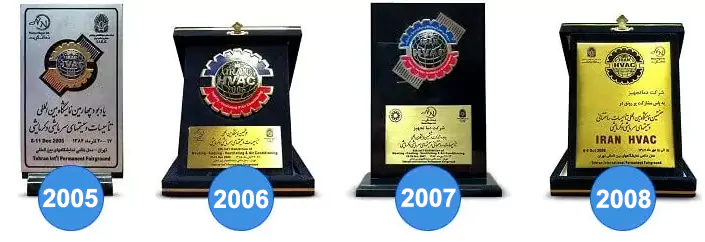
DamaTajhiz HVAC Participation at International HVAC and Construction Facilities Exhibitions Demonstrates its Global Reach and Commitment to the Industry.

We Look Forward to Your Call and the Opportunity to Meet You
SHARE THIS CONTENT TO SPREAD THE KNOWLEDGE
 |
 |
 |
 |
 |


Head Office: No. 463,Talebian Alley,Taleghani St.Tehran,Iran

DamaTajhiz has provided the opportunity to sell and ship specialized HVAC equipment for applicants in the following countries as the first and the most popular online store for selling HVAC equipment (Heating , Ventilation , Cooling , Air conditioning) in the Middle East : Afghanistan – Tajikistan - Uzbekistan – Turkmenistan – Azerbaijan – Armenia – Georgia – Turkey – Iraq – Syria – Jordan – Kuwait – Emirates – Qatar – Oman.


