
Evaporative Cooler
The evaporative cooler is one of the most economical options for cooling different spaces. This guide provides technical information, selection methods, capacity estimation, dimensions, brands, and the best prices for purchasing cellulose and wood-pad evaporative coolers. (Since 2004)
Comprehensive Guide to Choosing and Pricing Evaporative Coolers
When selecting and purchasing an evaporative cooler, it is essential to understand the different types of units, the features of each model, their advantages and disadvantages, and how suitable they are for your space and climate. This guide covers all types of evaporative coolers, compares wood-pad and cellulose models, explains their benefits, operating methods, and key considerations when buying to ensure a smart, cost-effective, and suitable choice.
DamaTajhiz HVAC Co.; A Specialized Guide for Selecting and Pricing HVAC Systems and Pool Equipment in Iran, Iraq, and the Middle East (Since 2004)
Types of Evaporative Coolers
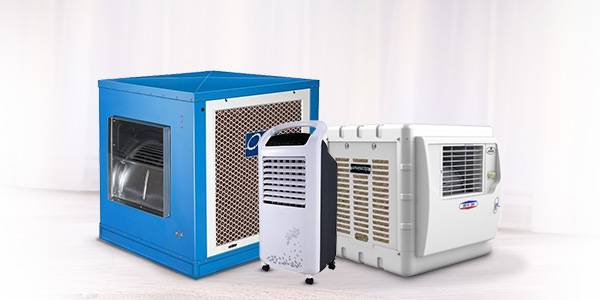
1. Wood-Pad Evaporative Cooler: Traditional coolers that use wooden pads to cool the air. These units generally have a lower price and are suitable for residential use.
2. Cellulose Evaporative Cooler: In cellulose coolers, cellulose pads are used instead of wood pads. Due to the volumetric continuity of the cellulose, these coolers provide more consistent and effective cooling compared to wood-pad coolers.
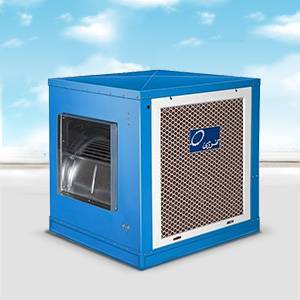
On this page, we provide a specialized review of cellulose and wood-pad evaporative coolers. However, evaporative coolers include other types as well, which are briefly explained below.
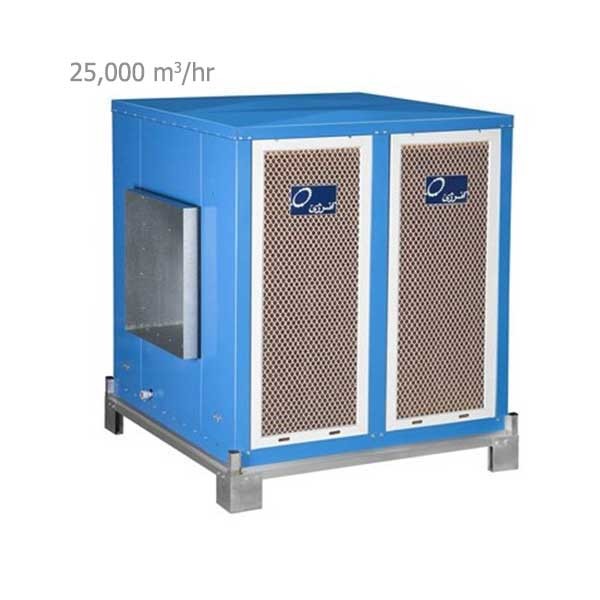
3. Industrial Evaporative Cooler: Industrial evaporative coolers are among the most commonly used cooling equipment in workshops, halls, mosques, exhibition spaces, and areas larger than typical apartments or homes.
Industrial evaporative coolers can use cellulose pads like cellulose coolers or wood pads like traditional coolers.
Using industrial evaporative coolers, especially for large halls with ceilings over 4 meters high in regions where the relative humidity is below 40% in summer, is a much more economical and suitable option compared to using industrial air washers.
4. Portable Evaporative Cooler: As the name suggests, portable coolers can be moved easily. Their water tank can be filled manually or connected directly to a hose and water tap.
5. Evaporative Cooler with Axial/Fan Blade: In this type, which is installed directly at a window, only direct airflow is possible without ducting. (Generally, a centrifugal fan is installed in stationary coolers to overcome pressure loss in duct channels.) However, if you want to use the cooler directly without ducting, you can use axial/window-type evaporative coolers, which cost about half the price of regular coolers. (Note that to supply fresh air, these coolers should be installed outdoors.)
The portable version should be placed where free airflow is available behind it. Therefore, axial/window-type coolers can only be used when cool air is blown directly and without ducting into the intended space.
Types of Evaporative Coolers by Airflow
Regardless of capacity, brand, or type, evaporative coolers are also categorized based on airflow location and method:
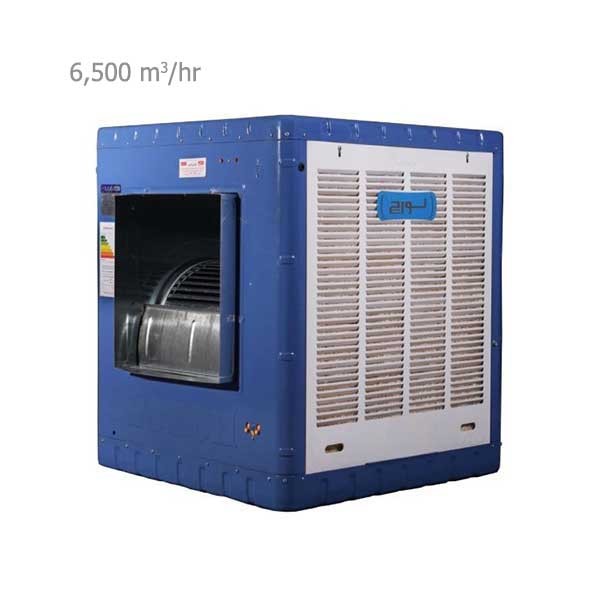
- Side-Blow Evaporative Cooler: Coolers where the air outlet or duct is on one side, often seen on rooftops of homes or apartments. This is the best-selling type of cooler.
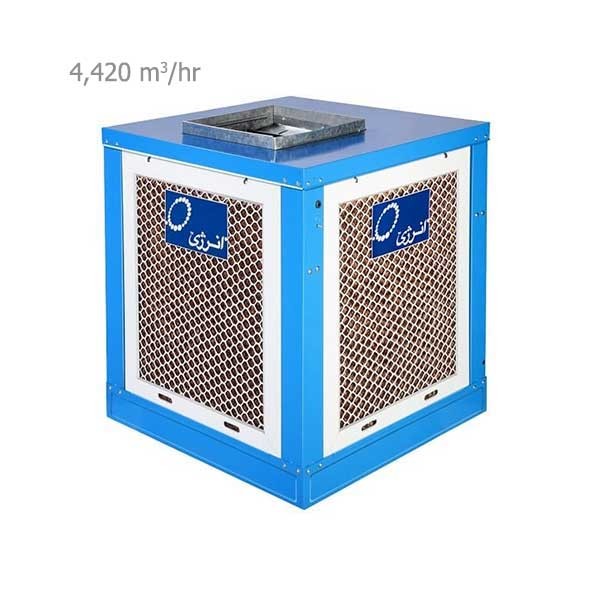
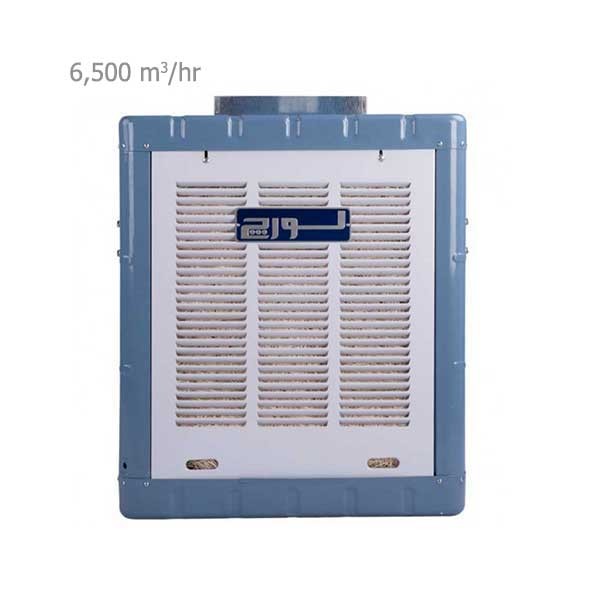
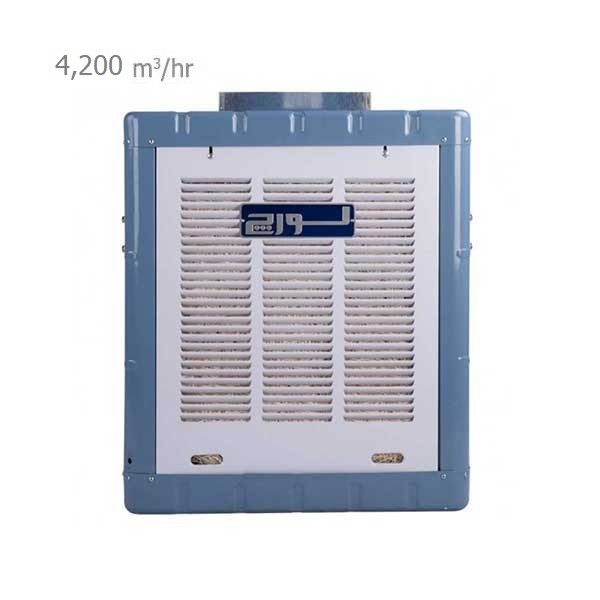
- Top-Blow Evaporative Cooler: Suitable for installation on balconies or terraces, these coolers allow air intake and cooling from all four sides, and their top airflow makes ducting easier when installed on a balcony or terrace.
An important point regarding operating evaporative coolers: given the statistics of electrical shocks leading to fatalities during cooler servicing, always turn off the main power switch before any annual or seasonal maintenance, or seek assistance from experienced technicians.
With the technical information and competitive prices offered by the specialized and reputable DamaTajhiz HVAC collection, we sincerely hope that customers can confidently choose DamaTajhiz & Co. for purchasing the required product (from a single unit to bulk orders for companies and construction projects), with original warranty and fast delivery across the country and even to neighboring countries and the Middle East.
Components and Structure of an Evaporative Cooler
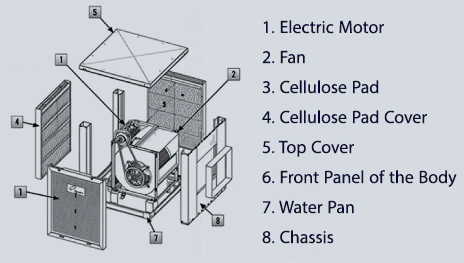
Each evaporative cooler generally consists of two parts: mechanical and electrical:
• The mechanical part includes the body, gutters, fan, float, internal and external ducts, bearings, pulley, fan belt, and three-way water valve.
• The electrical part consists of the water pump, dual-speed fan motor, terminal box, start capacitor, power factor correction capacitor, 4-core cable, and special switch.
How an Evaporative Cooler Works
An evaporative cooler cools the air by evaporating water. As mentioned, it consists of a powerful fan, water pump, and wood pads or cellulose pads. Its operation is as follows:
- The water pump directs water from the cooler's reservoir to the top of the pads.
- Water drips over the pads, keeping them moist.
- Hot outside air passes over the wet surface via the fan.
- During airflow, water evaporates, reducing the air temperature and producing cool air.
- The cooled air enters the building's interior through ducts or vents.
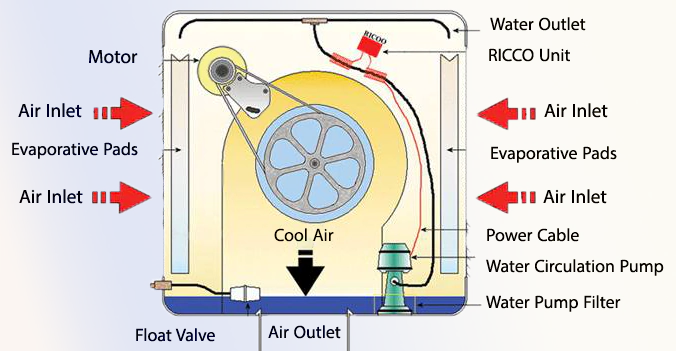
This cooling method is called evaporative cooling or, more scientifically, heat transfer with mass transfer (moisture).
Note: This cooling system operates without a compressor or refrigerant gas, using only water and electricity to provide natural, comfortable cooling. Simple operation, low energy consumption, and minimal maintenance costs are reasons for the popularity of evaporative coolers in Iran's hot and dry regions.
DamaTajhiz HVAC Inc.; Thousands of Products for Thousands of Projects Across the Middle East (since 2004)
Advantages of Evaporative Coolers
Generally, evaporative cooling is a common and efficient method to cool air (provided relative humidity is below 40%). Use of evaporative coolers is usually recommended in hot, dry cities.
In this method, the cooler adds moisture to the air, preventing dryness, wood cracking, and static electricity while providing cool air and enhancing air comfort.
Therefore, scientifically, gas or split AC is used in hot and humid areas, while evaporative coolers are ideal for dry and moderate regions.
The main reasons and advantages of evaporative coolers are:
- Lower cost
- Lower electricity consumption
- Easy installation and operation
- Low operational and maintenance costs
Comparison of Wood-Pad and Cellulose Evaporative Coolers
The table below shows the main differences and advantages of wood-pad and cellulose evaporative coolers for a more informed choice.
| Feature / Benefit | Cellulose Evaporative Cooler | Wood-Pad Evaporative Cooler |
|---|---|---|
| Initial Cost | Higher than wood-pad type | Economical and cheaper |
| Annual Maintenance | Less frequent replacement needed, but pads are more expensive | Low (wood pads are cheap) |
| Availability of Parts | Fewer parts but higher quality | Pads, pump, motor, and other parts are readily available |
| Evaporation Efficiency | High; more effective cooling | Moderate |
| Filter Lifespan | 3–5 years for cellulose pads | Wood pads need annual replacement |
| Dust Filtration | Stronger; pads capture more dust | Weaker |
| Uniform Cooling | Higher; due to integrated pad structure | Lower |
| Water Consumption | Lower; pads are more efficient | Relatively higher |
| Suitable for Spaces | Commercial, office, and industrial spaces | Residential and small areas |
| Noise Level | Lower; smoother fan and pad operation | Higher |
How to Choose the Capacity of an Evaporative Cooler
The method for selecting the capacity of various evaporative coolers is as follows:
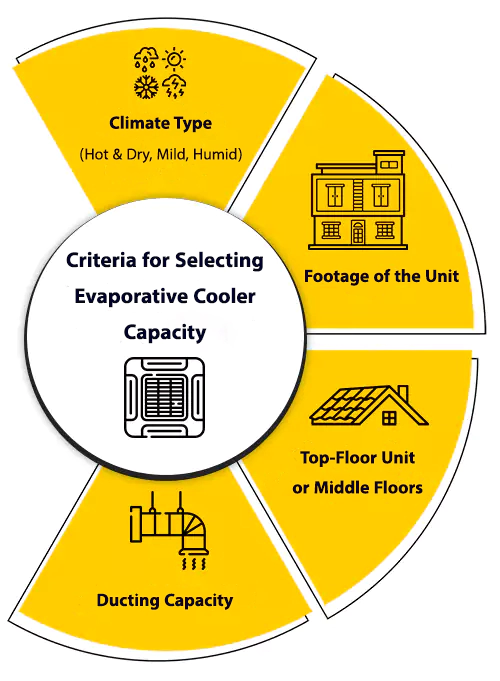
- The airflow capacity of evaporative coolers should be chosen according to the area and effective floor space of the intended location.
- When selecting the proper cellulose or wood-pad cooler, the unit’s placement—whether on the roof or mid-level floors—affects the capacity calculation. Units with roofs exposed directly to the sun may require higher cooling capacity or even supplemental cooling via air conditioning or split systems.
- Climate plays a crucial role in cooler selection. In dry, low-humidity areas, evaporative coolers are the most economical and effective option. In regions with high humidity (e.g., northern areas), evaporative coolers are less effective, making air conditioning or split systems a better choice.
- If a cooler with a capacity higher than the duct or vent design is selected, excessive noise due to high air velocity will occur. Therefore, outlet vents should be sized so that airflow passes at a rate of 400–600 cubic feet per minute (CFM) per vent.
The table below provides approximate coverage areas for each cooler model under warm-moderate or cold-moderate climates, including cities such as Tehran, Isfahan, Shiraz, Semnan, Mashhad, Khorramabad, Tabriz, Shahroud, Kermanshah, etc.
Note: For cellulose coolers, add 10–15 m² to the effective coverage of each model.
DamaTajhiz & Co.; Guide to Choosing and Buying HVAC Systems in the Middle East (Since 2004)
What is the CFM of an Evaporative Cooler?
The airflow capacity produced by an evaporative cooler is typically expressed in Cubic Feet Per Minute (CFM). CFM indicates the volume of air produced per minute. For example, a cooler with a 4000 CFM rating generates a maximum airflow of 4000 cubic feet per minute at high speed.
To ensure adequate cooling, especially in units located under a hot roof, proper airflow capacity (CFM) must be calculated, and ducting and vents must be installed correctly and precisely.
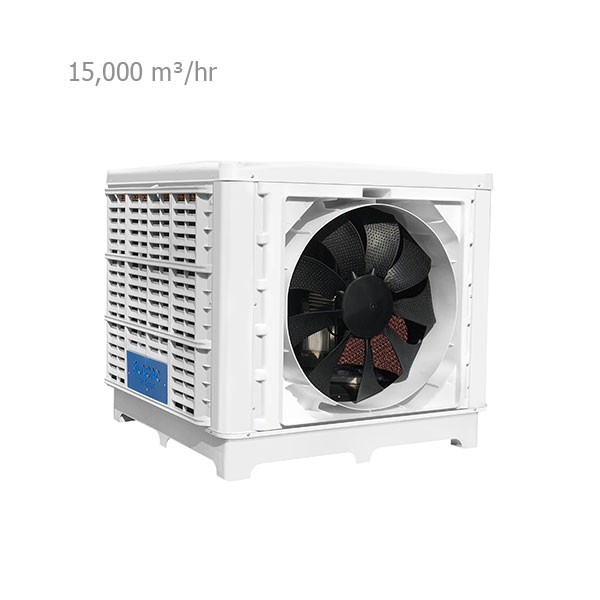
Many modern manufacturers also indicate cooler capacity in cubic meters per hour (m³/hr).
Purchasing an Evaporative Cooler
The first step in buying an evaporative cooler is considering the space dimensions and cooler capacity. Evaporative coolers come in different models and airflow capacities. To make an optimal purchase, assess the area and usage of your environment before selecting the model and airflow capacity.
Then, factors such as energy consumption, features, brand, and advantages should be reviewed.
At DamaTajhiz HVAC Co., technical information for dozens of cooler models from reputable brands with original warranties is provided to ensure a confident, smart, and efficient purchase experience.
We recommend checking the final cooler dimensions against the width of the rooftop or installation space before placing an order.
Key factors to consider when purchasing a cooler include:
- Airflow Capacity: Choose according to space size (e.g., 3500, 5000, or 7000 CFM).
- Electricity Type: Check whether your site uses single-phase or three-phase power.
- Installation Location: Select roof-mounted, wall-mounted, or portable models based on available space.
- Type of Pad: For uniform cooling and efficiency, cellulose coolers are preferred over wood pads.
- Brand and Warranty: Brands such as Energy, Absal, Sepehr Electric, etc., are available at DamaTajhiz & Co. with valid warranties.
Evaporative Cooler Pricing
Prices vary depending on capacity and brand. To choose and purchase easily, determine the brand and required capacity first. DamaTajhiz HVAC corporation provides technical details for numerous models from reputable brands with original warranties.
All products include updated prices, item codes, and applied discounts for consumers.
Why Choose DamaTajhiz?
DamaTajhiz HVAC Co. is the first specialized reference for HVAC equipment in Iran, active since 2004 (1383), offering:
- Wide product variety
- Free expert consultation
- Competitive pricing
- Fast and reliable nationwide delivery
- Easy online purchasing
Usage, Installation, Service, and Maintenance Tips
Proper usage, installation, and maintenance directly impact the performance and lifespan of the cooler. Key points include: starting the cooler, improving efficiency, pad replacement, proper ducting, and removing scale deposits.
DamaTajhiz & Co.; Providing HVAC Systems and Equipment Across the Middle East (since 2004)
Safety Tips When Operating Evaporative Coolers
Electric shock is the most common hazard when servicing or operating evaporative coolers. The unit is always wet, increasing shock risk. The metal body and complex wiring require service by qualified technicians. Never attempt rooftop servicing alone.
Check the cooler body with a voltage tester before replacing pads. Modern systems should have residual current devices (RCD) to automatically cut power in case of electrical faults.
If servicing yourself, always ensure the unit is off and ideally notify others or have someone accompany you.
Tips When Turning On the Cooler
- Open a window slightly to allow cooler air to circulate and ventilate the space.
- Do not place cooler vents in kitchens, as airflow may extinguish gas flames.
Ways to Increase Cooler Efficiency
- Proper ducting according to engineering standards
- Leave a window open for airflow exit
- Use a sunshade over the cooler
- Clean or descale the water pump filter
- Drain the cooler pan at season end
- Cover the cooler during months of non-use
These measures protect the cooler body from sun and rain and prevent dust accumulation on the fan.
Installation and Pad Replacement Tips
- Check cooler dimensions to ensure it fits through rooftop or installation space.
- Fixed coolers typically require a base frame purchased separately.
- Ensure level installation for uniform water distribution and proper fan operation.
- Replace pads annually (wood) or every 3–5 years (cellulose), depending on air quality and water hardness.
- Ensure the cooler can access fresh air to avoid humidifying indoor air excessively.
- Use a thermostat to control electricity and water usage.
- Cover the cooler in off-season to prevent water damage and dust accumulation.
DamaTajhiz & Co.; The Best Prices and Reputable Brands of HVAC Systems in the Middle East (Since 2004)
Importance of Proper Ducting
Airflow and cooling directly depend on correct ducting according to engineering calculations and standards. Avoid direct sun exposure on ducts and cooler by installing shading and insulation.
Removing Scale Deposits
Scale buildup can damage mechanical and electrical components. Common solutions include:
- Using cellulose pads: Prevent scale formation and simplify cleaning.
- Using muriatic acid or bleaching agents: Use gloves as these are hazardous chemicals.
- Vinegar solution: Effective for light deposits.
- Regular water replacement: Reduces scale accumulation.
- Special scale removers: Remain in water for months to prevent scaling on pads and body.
Dear Customer,
- All products at DamaTajhiz & Co. come with original warranty, and promotional discounts apply for all major brands.
- Purchase reliable brands only from DamaTajhiz HVAC Inc. with guaranteed product quality and competitive pricing.
You can order any HVAC and MEP products, including different types of air washers, cooling towers, air handling units, chillers, industrial evaporative coolers, air curtains, burners, cast-iron or steel boilers, heat exchangers, gas heaters, unit heaters, circulation pumps, sand filters, water and fuel storage tanks, and more, from countries such as the UAE, Armenia, Tajikistan, Georgia, Azerbaijan, Turkey, Oman, Pakistan, Turkmenistan, Afghanistan, Kuwait, Bahrain, Qatar, Iraq, and others across Asia, the Middle East, and Europe, and have them delivered to your city (Manama, Baghdad, Karachi, Dubai, Sharjah, Muscat, Riyadh, Abu Dhabi, Kuwait City, Jeddah, Sana'a, and Doha Amman, Sulaimaniyah, Sofia, Kirkuk, Islamabad, Mosul, Erbil, Dushanbe, Aleppo, Damascus, Baku, Beirut, and Kabul) in the shortest possible time. So, contact us by phone call or WhatsApp message through the number: +98-930-288-0251.
"Knowledge Fuels Better Choices"
Registered Trademark and Stewardship Business Licenses Issued by the Union of Virtual Business Association and the HVAC Equipment Industry.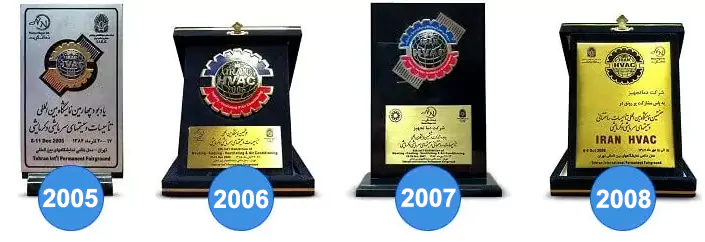
DamaTajhiz & Co. Participation at International HVAC and Construction Facilities Exhibitions Demonstrates its Global Reach and Commitment to the Industry.
We Look Forward to Your Call and the Opportunity to Meet You
SHARE THIS CONTENT TO SPREAD THE KNOWLEDGE
 |
 |
 |
 |
 |








Head Office: No. 463,Talebian Alley,Taleghani St.Tehran,Iran

DamaTajhiz has provided the opportunity to sell and ship specialized HVAC equipment for applicants in the following countries as the first and the most popular online store for selling HVAC equipment (Heating , Ventilation , Cooling , Air conditioning) in the Middle East : Afghanistan – Tajikistan - Uzbekistan – Turkmenistan – Azerbaijan – Armenia – Georgia – Turkey – Iraq – Syria – Jordan – Kuwait – Emirates – Qatar – Oman.


