
Pool Filter
To remove suspended particles from water and achieve clean water, a pool water filtration system is used. When selecting a suitable pool filter, attention should be paid to the technical specifications, required capacity, and price.
Pool Filter Expert Buying Guide and Price List
A pool filter is one of the main components of a water treatment system, playing a key role in water clarification by removing suspended particles, contaminants, and turbidity. Water is filtered as it passes through media such as sand, silica, or diatomaceous earth, then returned to the pool. Proper filter selection—based on capacity, application type, and installation location, has a significant impact on water quality and chemical consumption. Pool filters operate on the principle of physical filtration, and regular maintenance along with periodic backwashing helps maintain their performance.
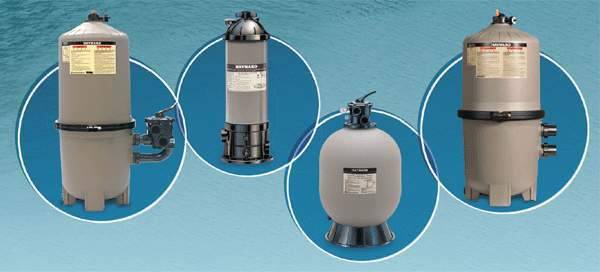
The three main types of pool filters are sand, diatomaceous earth (DE), and cartridge filters, each with its own advantages and applications. Sand filters are simple and cost-effective, DE filters offer superior removal of very fine particles, and cartridge filters are suitable for small spaces and do not require backwashing. Understanding the features of each filter type enables a more accurate selection based on needs and budget. To review available models and prices, visiting specialized pool equipment suppliers is recommended.
By understanding the characteristics of each model, you can make a more informed pool water filter purchase and select the best option according to your capacity requirements and budget. For model comparison and up-to-date pricing across different brands, consulting specialized pool equipment stores is advised.
Types of Pool Filters
There are 3 main types of pool filters, cartridge filter, diatomaceous earth filter, and sand filter:
Pool Cartridge Filter
Cartridge pool filters can absorb particles of 2 to 7 microns from water and are suitable for use in home hot tubs, small therapeutic pools, small indoor pools, and endless pools. The cartridge filter has a cylindrical filter plate inside, and it is very easy to clean them in a short time.
One of the other uses of pool cartridge filters is to use them on the pool vacuum up to 2HP motor power. This prevents the splashing of water, and the user can purify it at the same time while vacuuming the pool water; you can return the filtered water to the pool and prevent water wastage.
The main reason that cartridge filters can be used on pool vacuums is their lightness, small size, and high filtration power; of course, if the power of the pool vacuum's motor is more than 2HP, you can no longer use the pool cartridge on it.

Pool DE Filter (Diatomaceous Earth)
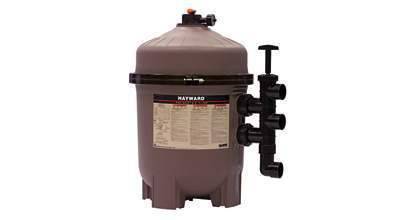
Among all the water purification filters, DE filters have high efficiency. They are suitable for use in public and private pools, with the ability to absorb particles between 10 and 20 microns.
In diatomaceous earth filters AKA DE filters, a special soil called diatomaceous earth is used, and the amount of this soil varies according to the capacity of the filter. Diatomaceous earth is the fossil remains of microscopic marine plants with a siliceous shell, which is considered an ideal and chemically neutral filter.
In DE filters, diatomaceous earth soil is not poured directly into the filter but through the strainer into the pool pump. When the pressure on the diatom filter gauge rises above its normal level, the filter needs a backwash. After each time the filter is washed, the corresponding filter must be recharged with diatomaceous earth.
Pool Sand Filter
Pool sand filters have more weight than the other two competitors, DE filters and cartridge filters (especially the metal type); among the types of pool water filters, swimming pool sand filters are the heaviest. This high weight is mainly due to the use of silica or sand to purify pool water.
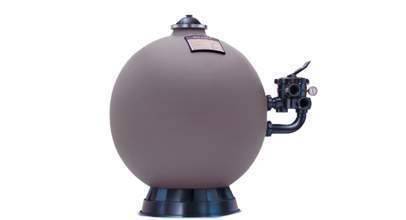
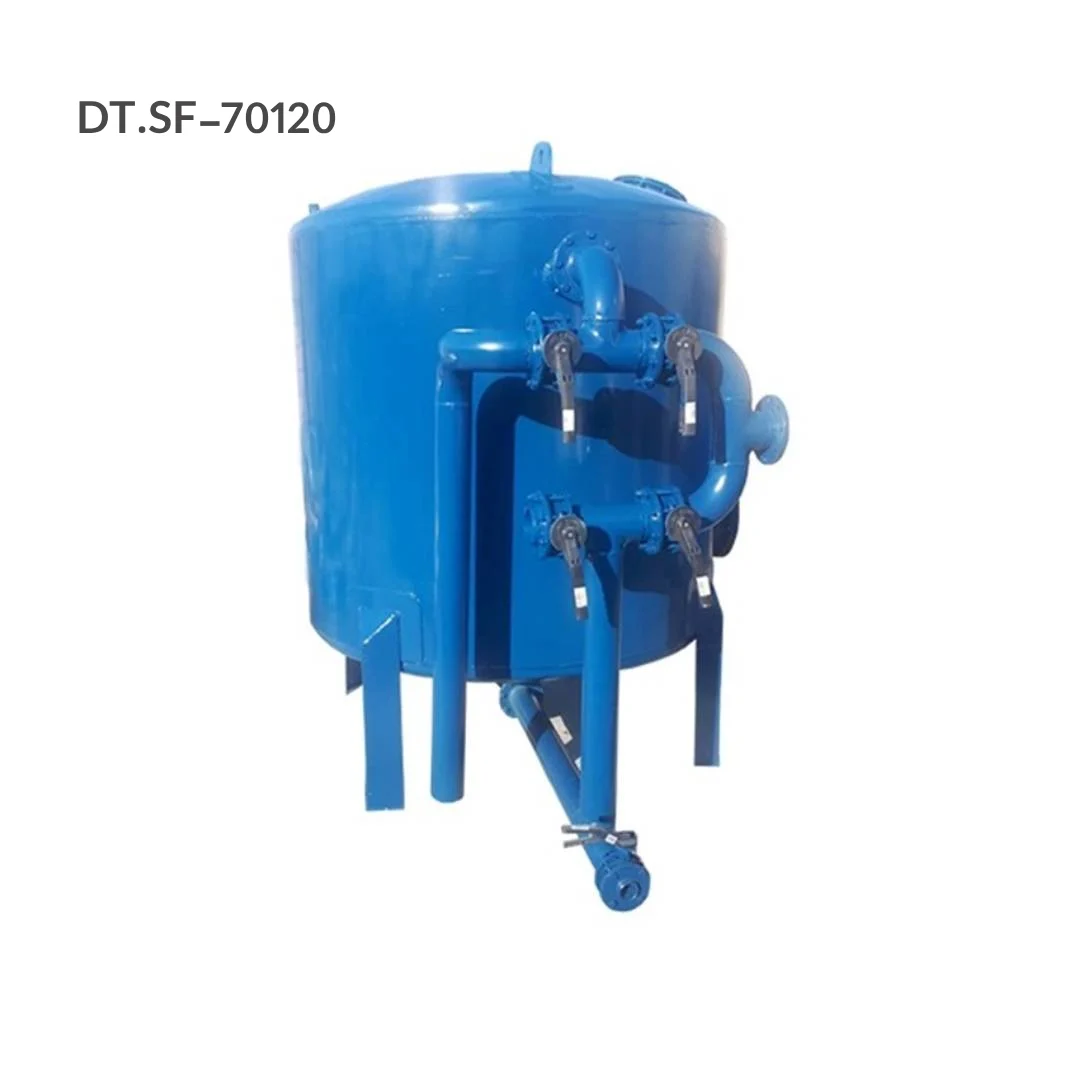
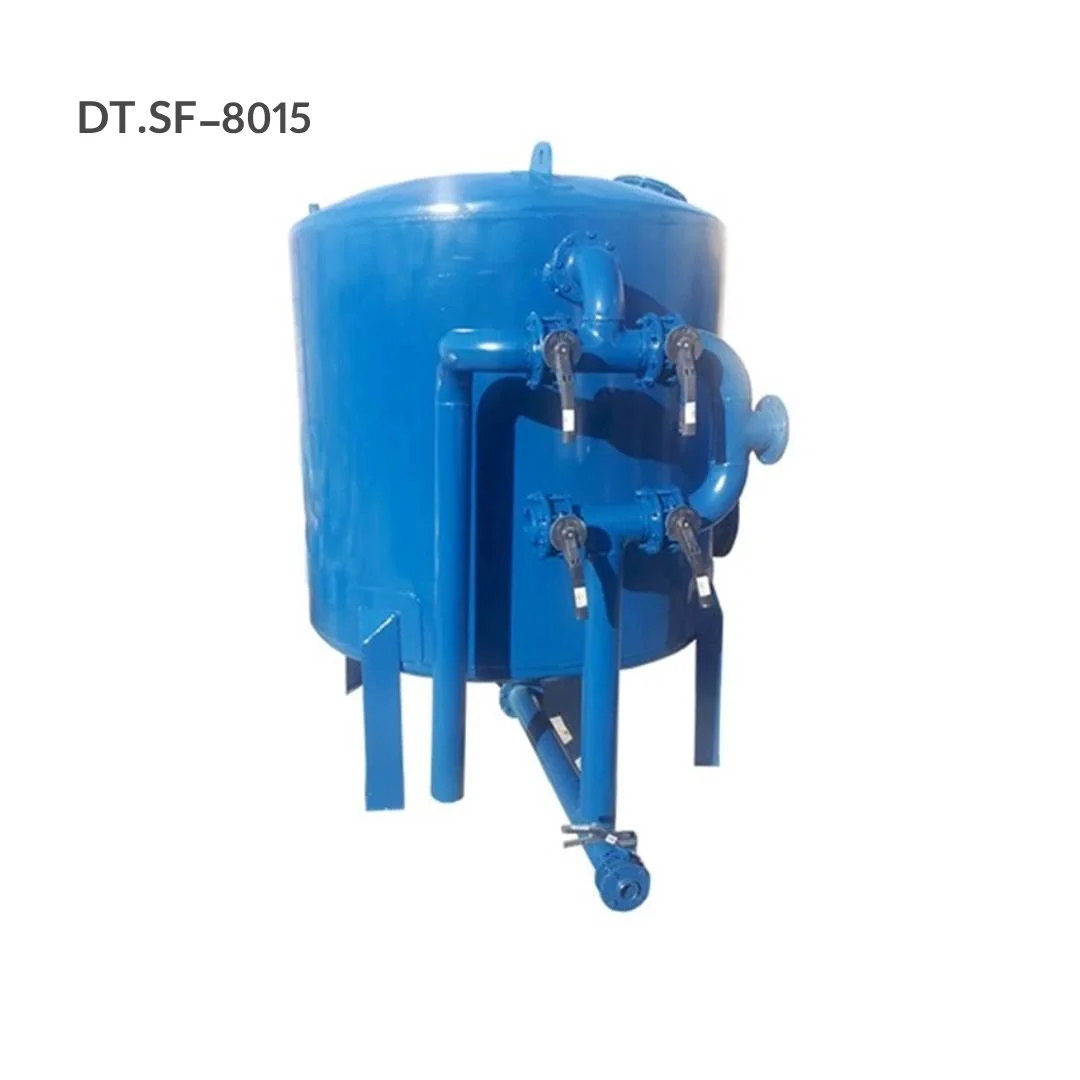
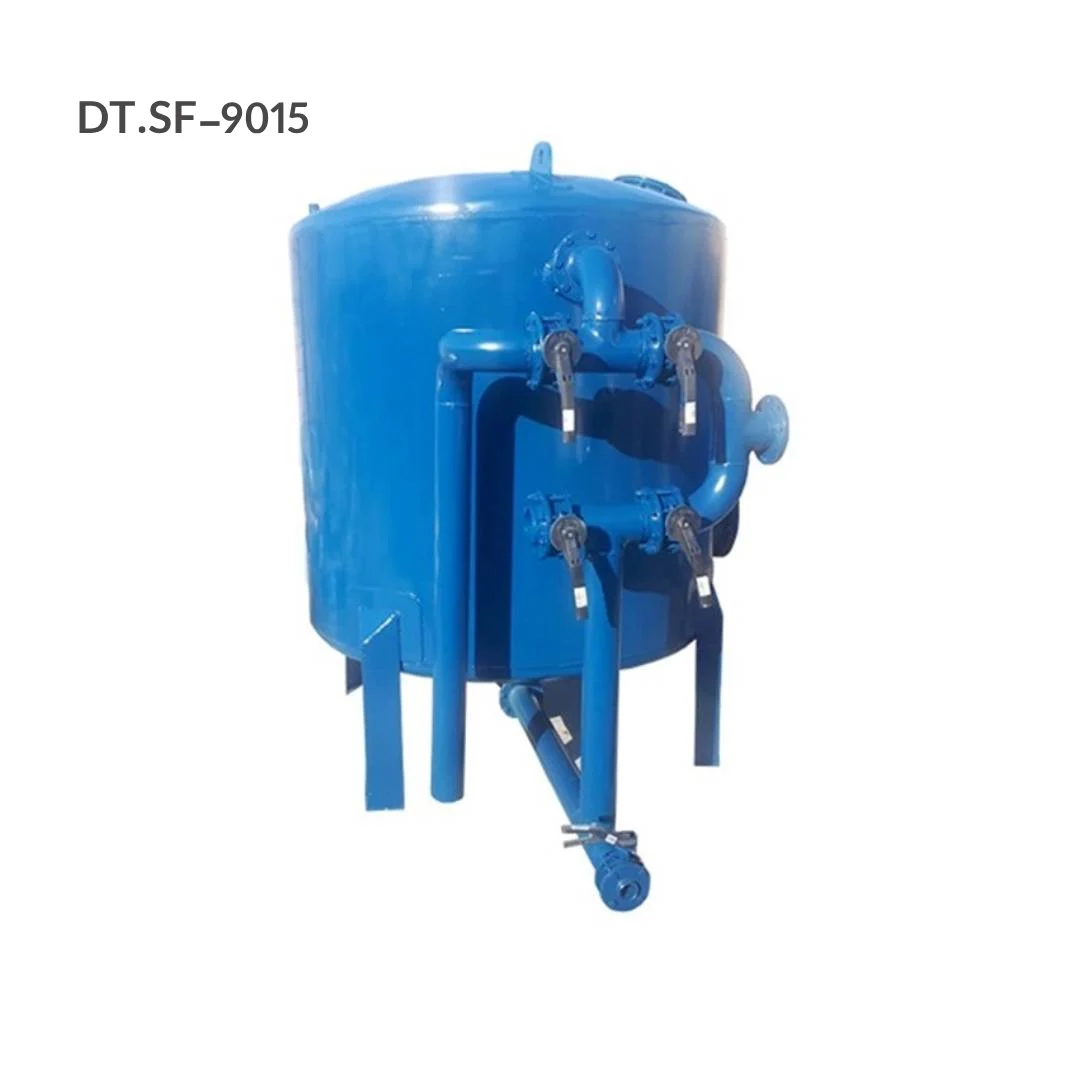
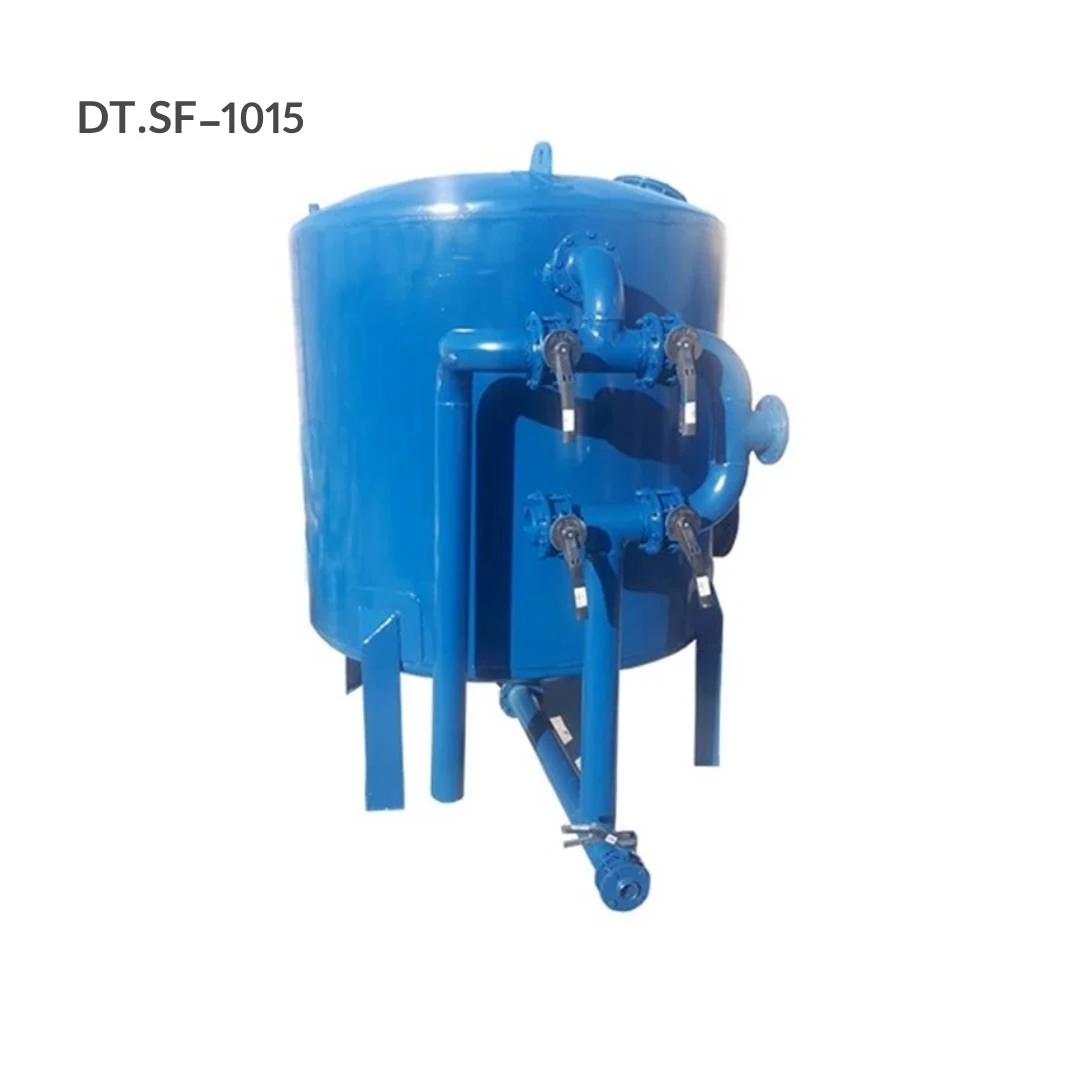
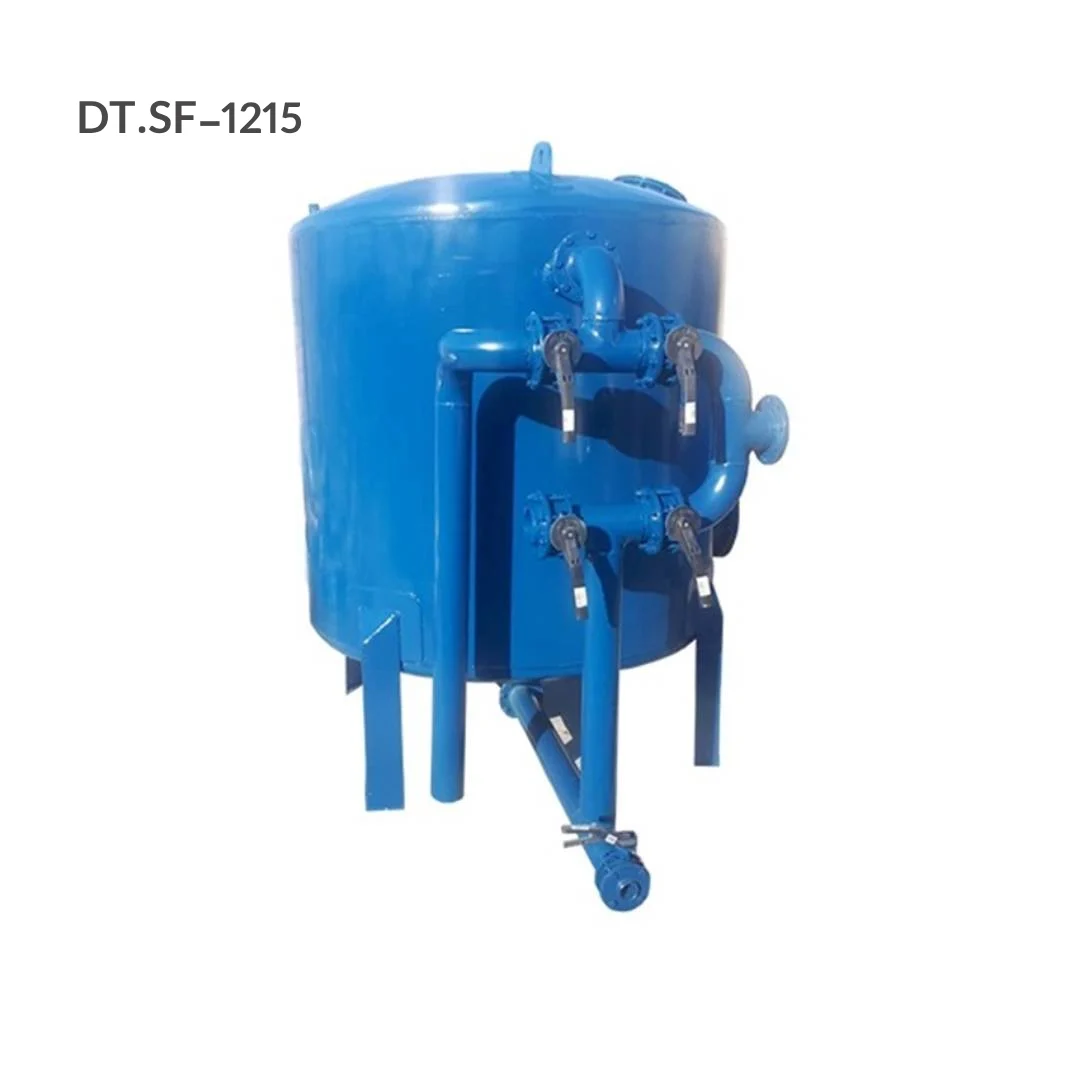
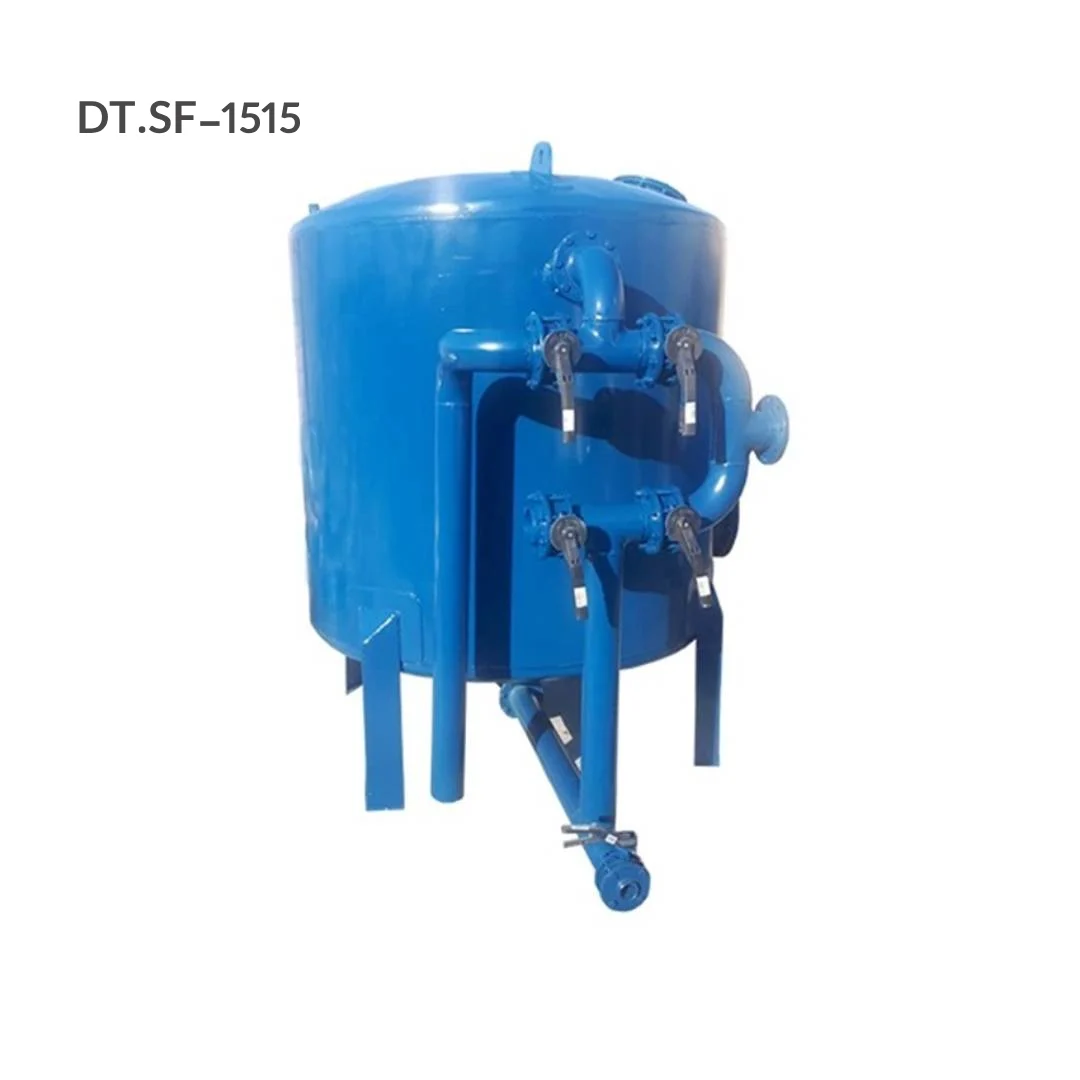
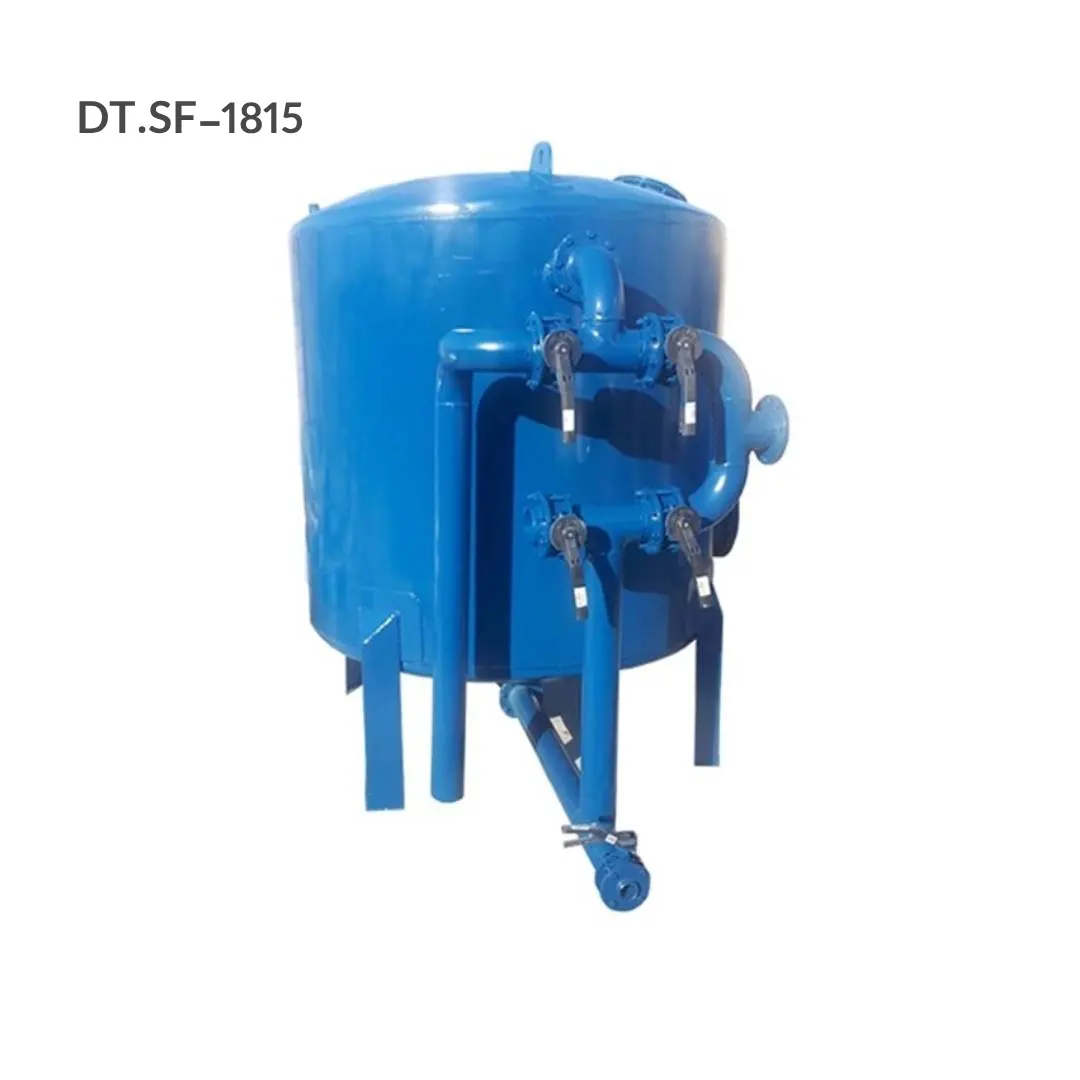
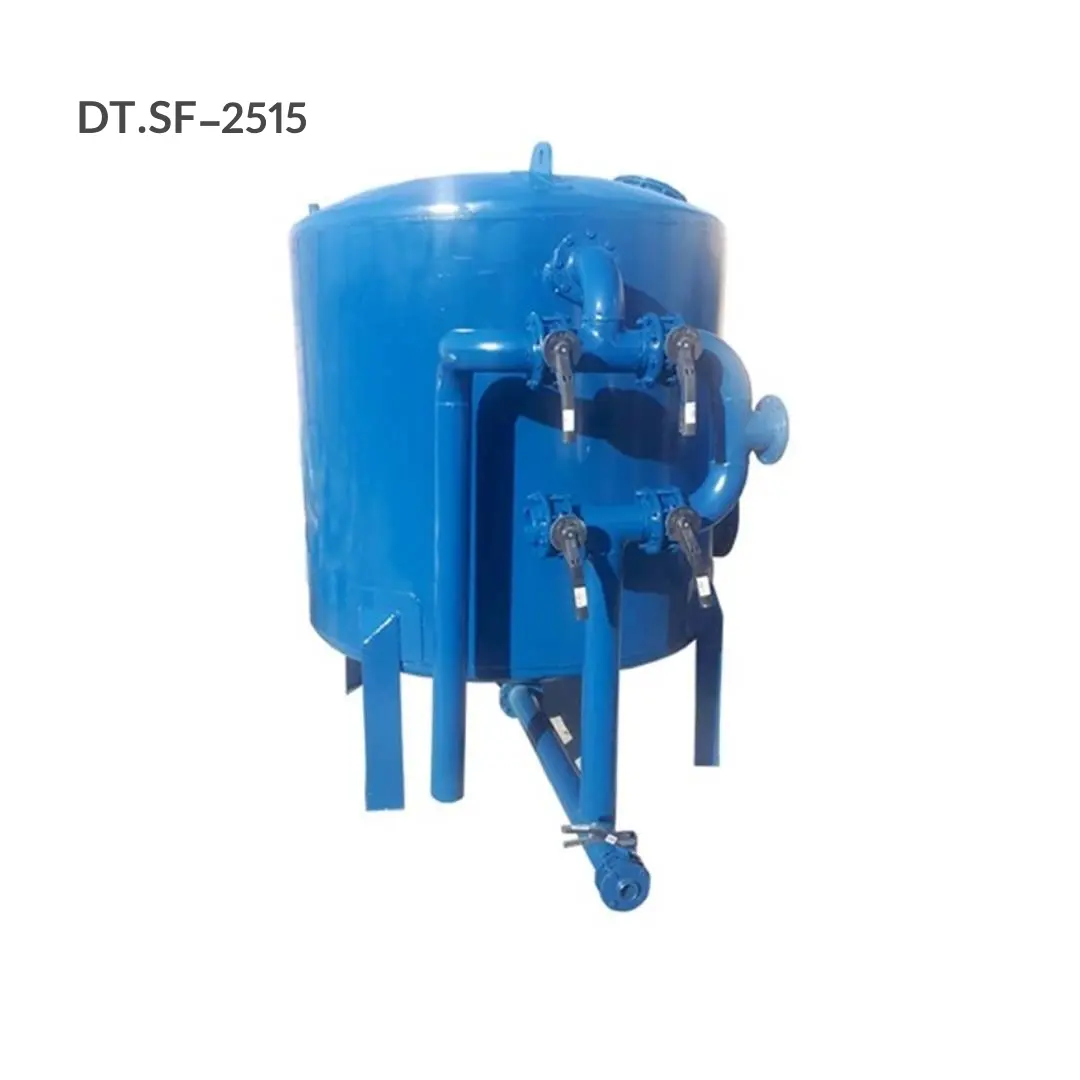
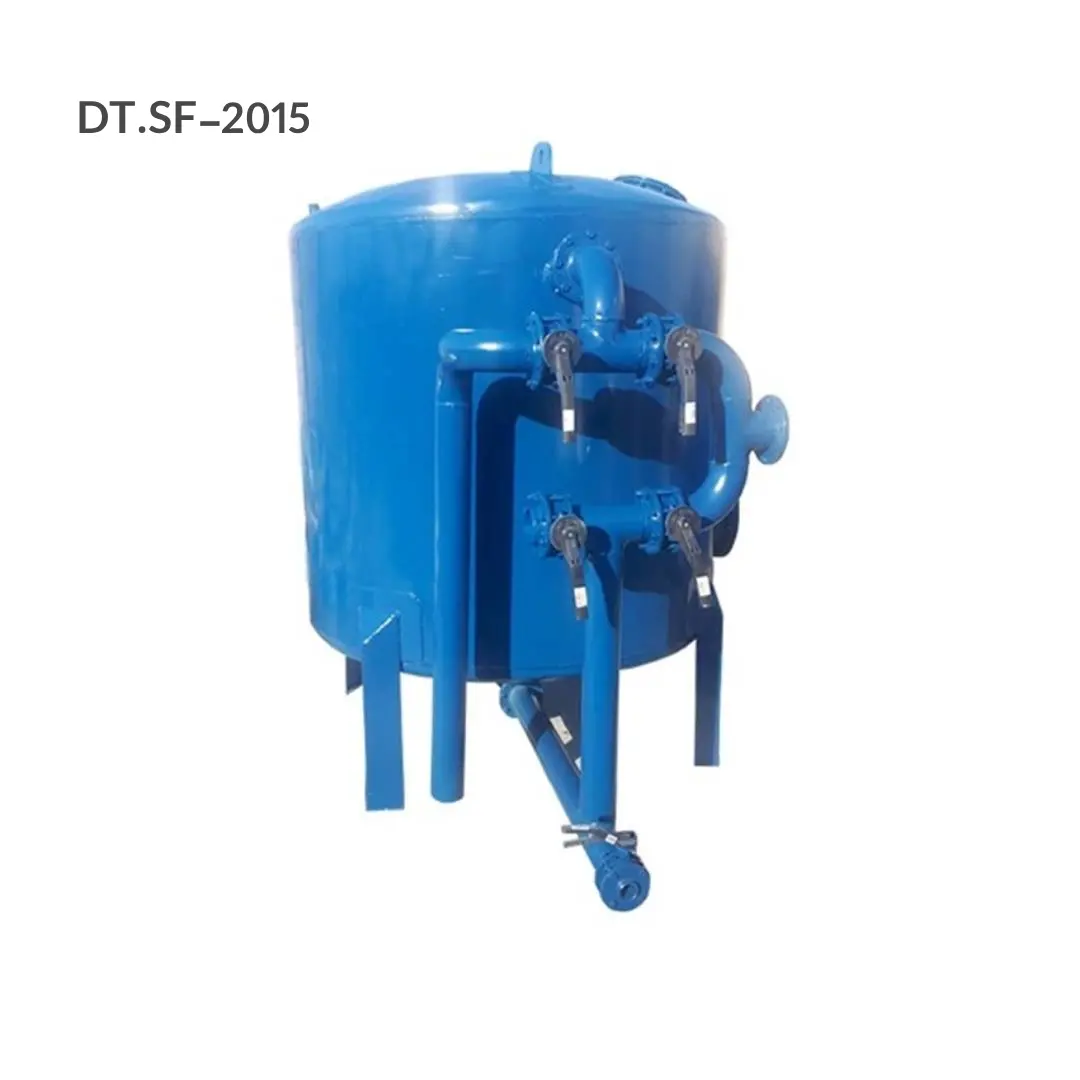
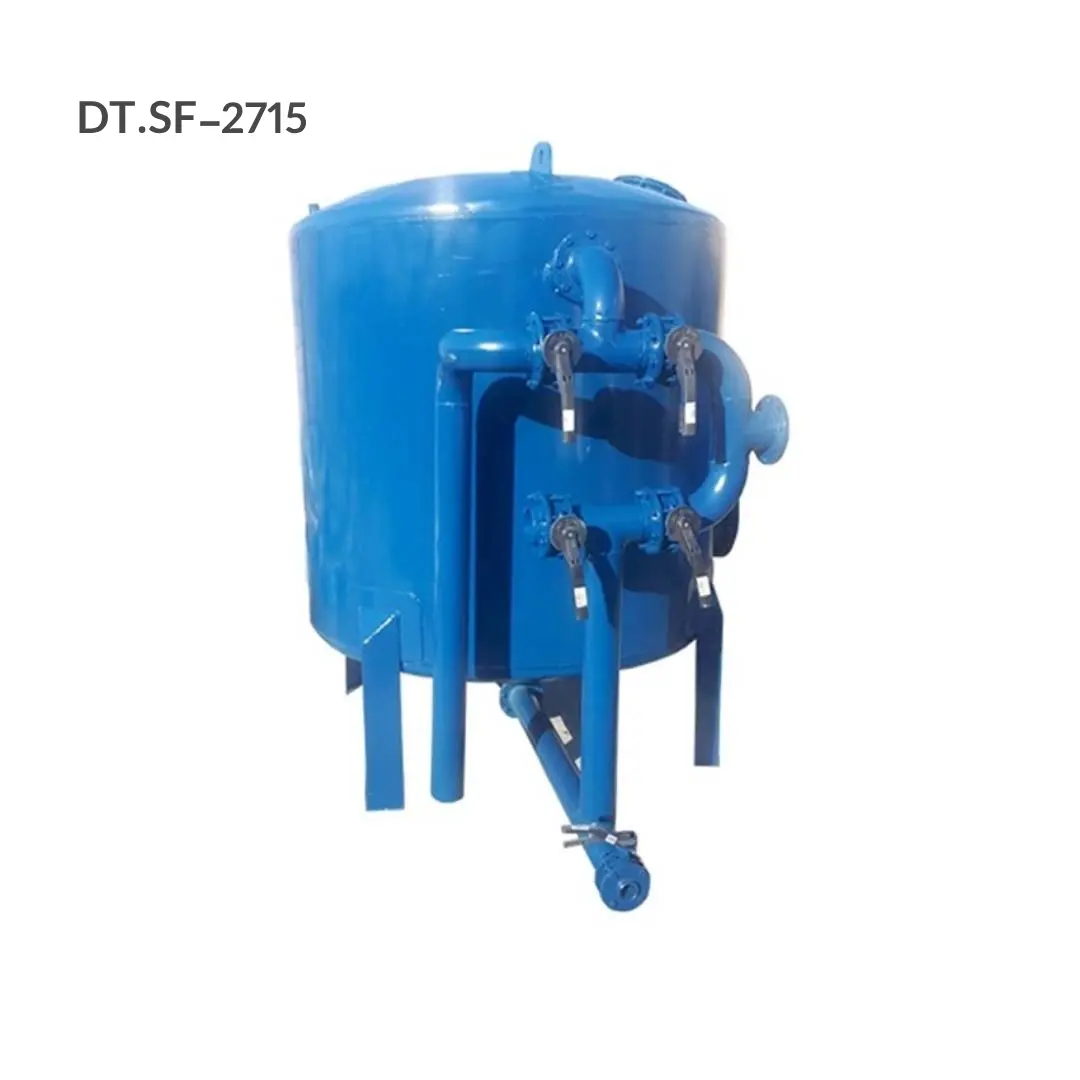
Sand pool filters are made with metal tanks, fiberglass tanks, or composite materials. Sand filters with a metal tank can withstand high pressures and are produced and supplied in large sizes.
However, there is a possibility of rust entering the pool water, which is necessary to prevent it from rusting by covering the interior with suitable epoxy paint and proper maintenance.
In sand filters with fiberglass (FRP) or composite tanks, there is no rust and corrosion problem. Still, the working pressure, water temperature limit, and sand volume are less than metal filters, which are solvable if installed in parallel and, therefore, can be used in high-volume pools.
Usually, 60% of the sand pool filter tank is filled with sand or silica, which are available in two models:
Processed Sand
They are made from a special polymer with nanotechnology and are available in 25 kg packaging. The useful life of this sand is more than 10 times more than glass sand, and it also offers better purification.
Regular Sand
They are available in three types of coarse, fine, and medium grains, each of which is presented in 40 kg bags.
Usually, when using this type of sand in the sand filter, 70% of the total volume of sand needed in the filter is placed at the top of the filter, 15% of the medium grain in the middle, and 15% of the coarse sand in the bottom of the sand filter tank. The use of coarse-grained sands and silica in the filter prevents the escape of fine-grained sands or silica due to the flow of water.
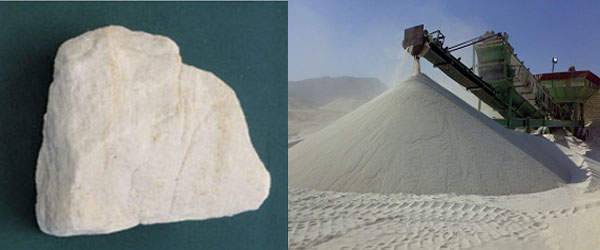
Nowadays, silica is used as a purifying material in sand filters for swimming pools, which is also known as glass sand. High-quality silica is a white and shiny grain that is prepared by crushing silica rock.
After crushing the stones, they are sieved and marketed in different sizes. The best and highest grade silica for pool sand filters in Iran is Hamadan silica, which is white without brown and yellow streaks.
There are two main types of sand filtrations based on their shapes, although only pressure sand filters are used for pools and hot tubs:
- Rapid sand filter
- Pressure sand filter
Review, Selection, and Pricing of HVAC Equipment
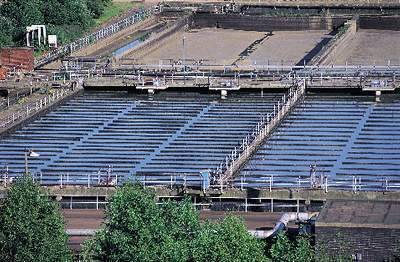
Rapid Sand Filter (Gravity)
Rapid sand filtration is one of the oldest sand filters. The surface of silica is in the vicinity of free air, and water is passed through this surface.
The passage of water is without pressure and due to the weight of the water itself, which is done slowly due to the low pressure; that is why these filters are called rapid sand filters of the pool. This type of pool sand filter is mostly used in water purification with a very high volume, such as the purification of water used in cities and industrial effluents.
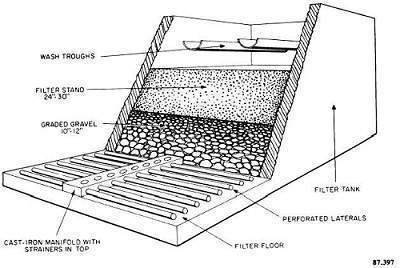
This type of filter is typically used for large-scale filtration, such as municipal water and wastewater filtration.
Pressure Sand Filters (Tank)
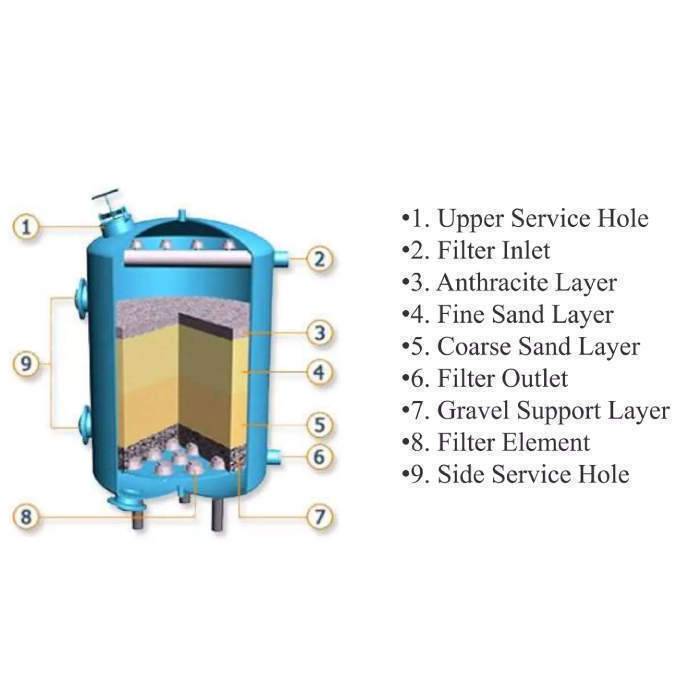
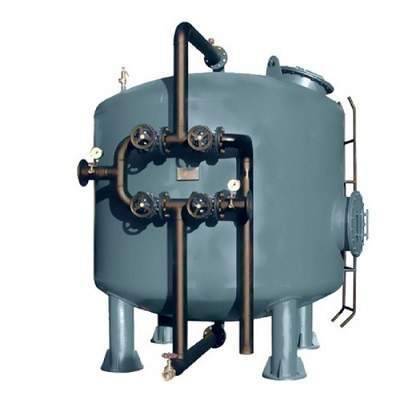
Silica in the sand filter of the pool is inside a closed tank, and the water of the pool or hot tub is passed over the silica bed under the pressure of the pump. It should be noted that the speed of water passing through the sand bed of these filters is higher than the rapid sand filter. Three or four different sizes of silica are used in the closed pool sand filter.
In the bottom of the sand filter of the pool, they place coarse grain silica with a size of 5 to 8 mm or 3 to 5 mm, which depends on the type and size of the nozzle of the filter bottom. In the next row, the size of silica decreases by one degree and reaches a diameter of 1 to 3 (medium grain) mm.
This layer is used to prevent the passage of the upper silica grains, which are smaller in size. In the higher silica row, the silica size will be less than 1 mm (fine grain), which means it has a diameter between 0.8 and 0.2 mm.
Water filtration and particle absorption are mainly in charge of this row of silica, and the other rows are used only to prevent the exit of this row of silica from the sand filter. In some sand filters, a row of silica with a larger diameter is used on the top row of silica so that 0.8 to 0.2 silica, which has a very small weight, does not come out of the pool sand filter during the backwash.
Pressure sand filters are mostly made of fiberglass, which has advantages and disadvantages. One of its most important advantages is much less wear and tear, especially in wet areas, and one of its most important disadvantages is the limitation in temperature and pressure tolerance compared to the metal pool sand filter.
 |
 |
Vertical Pressure Sand Filter
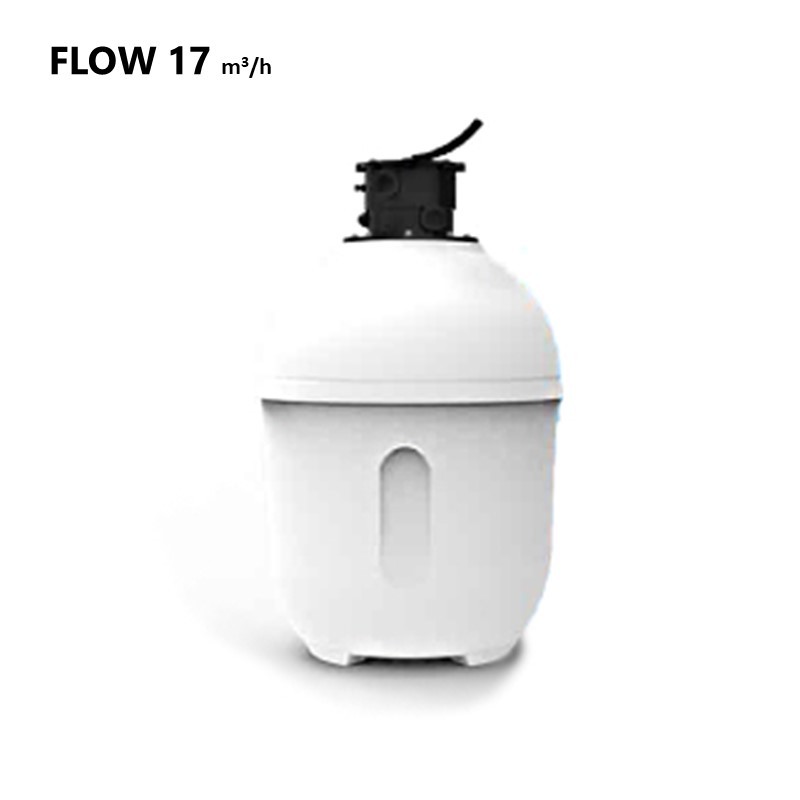
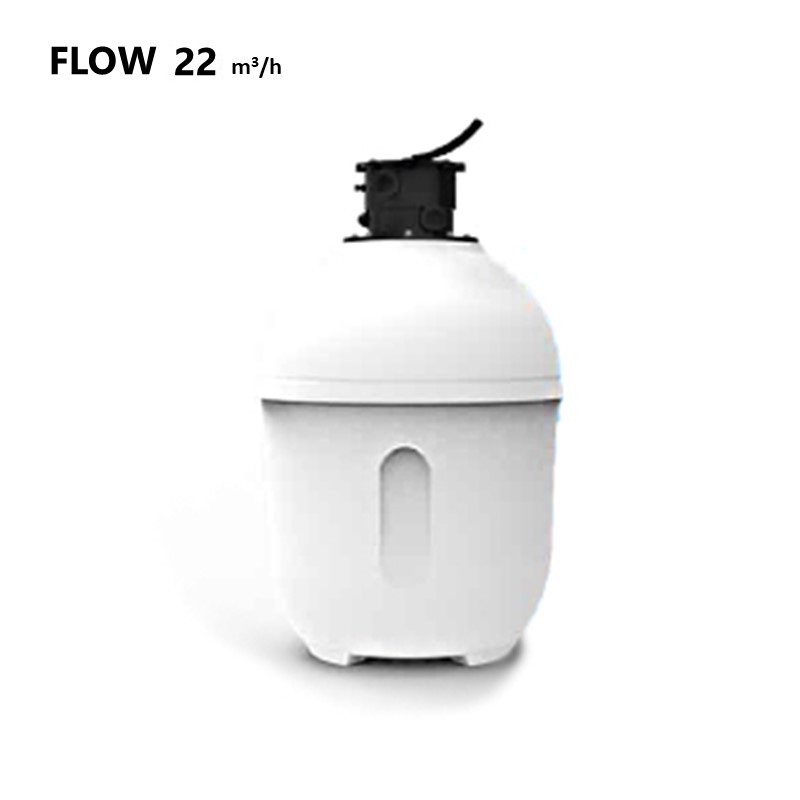
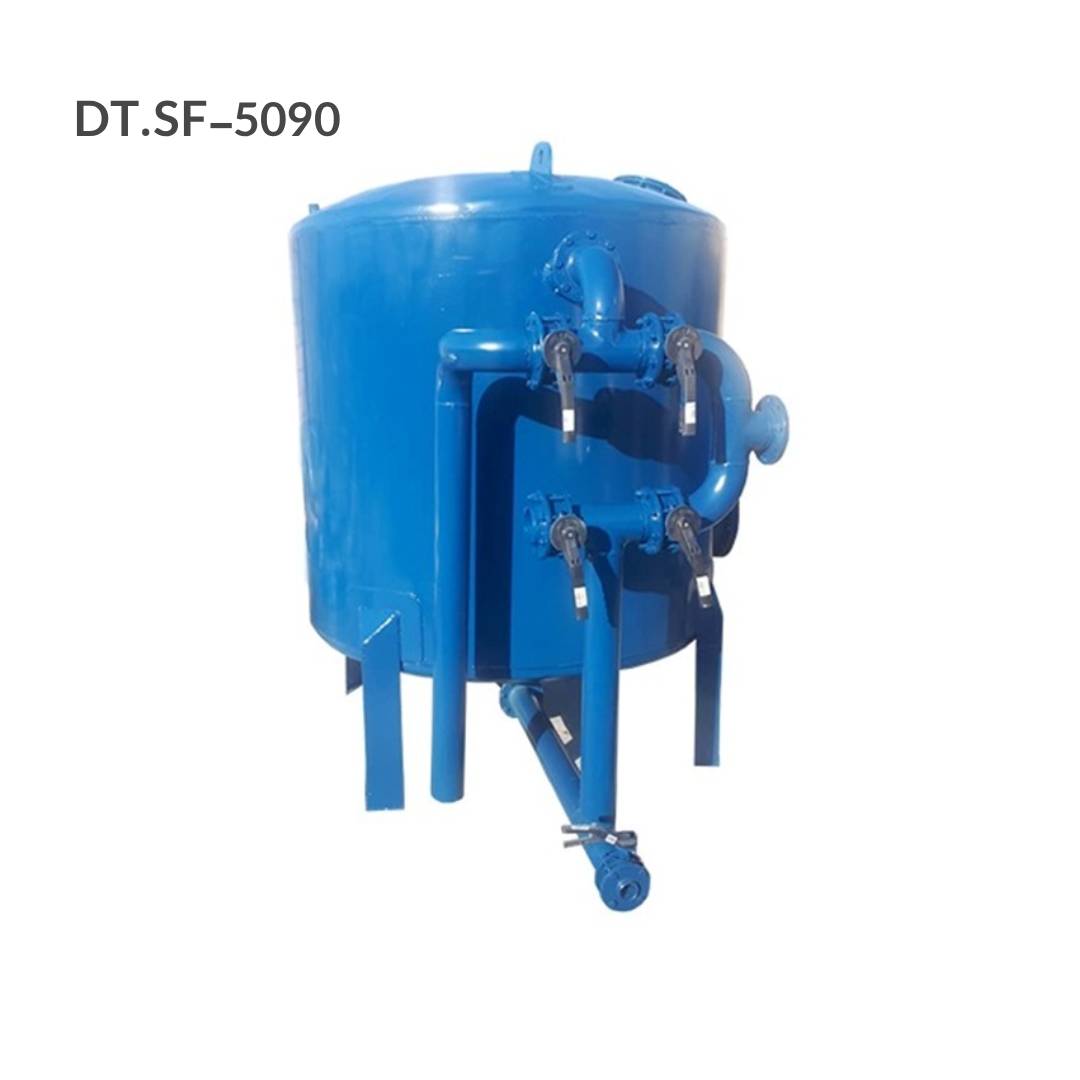
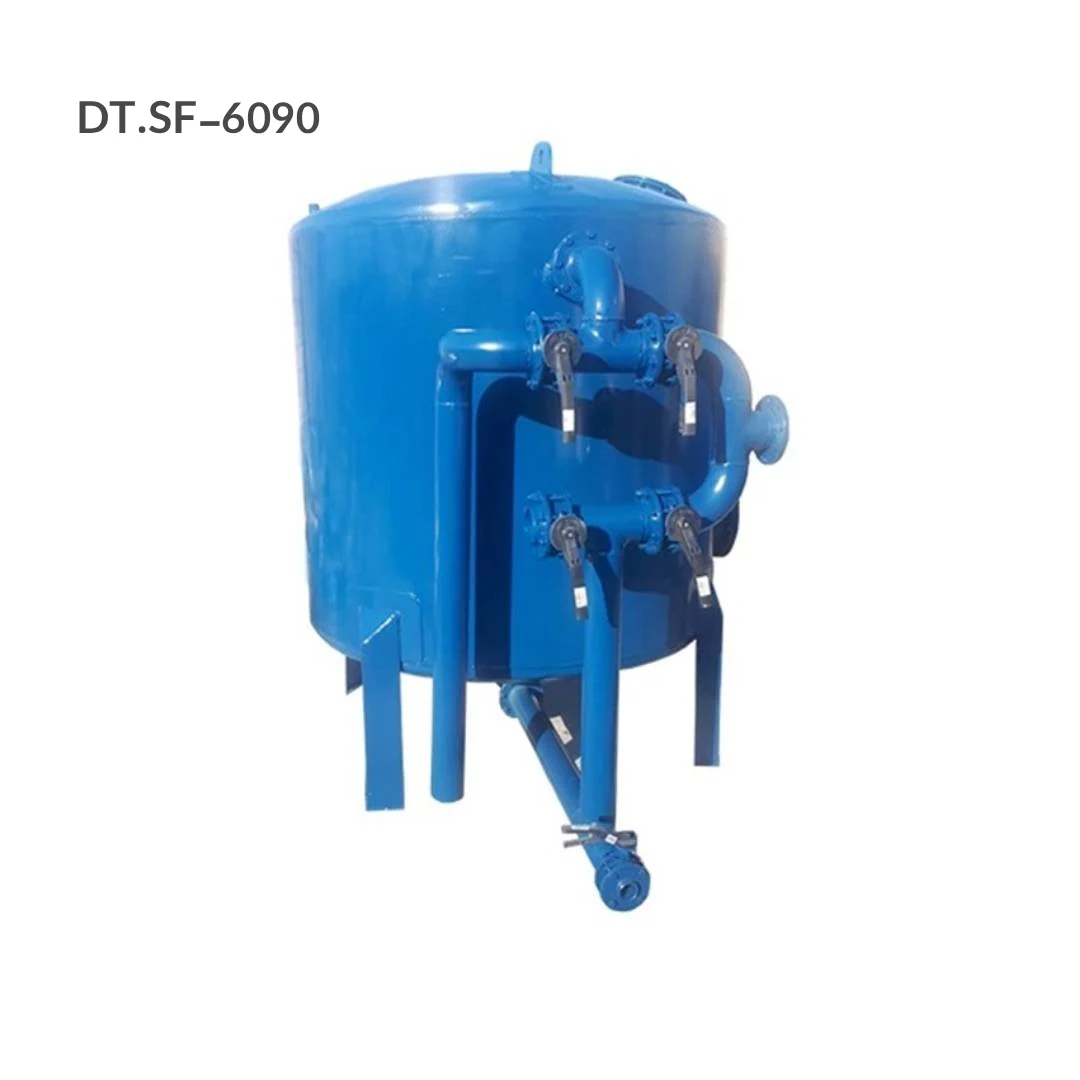
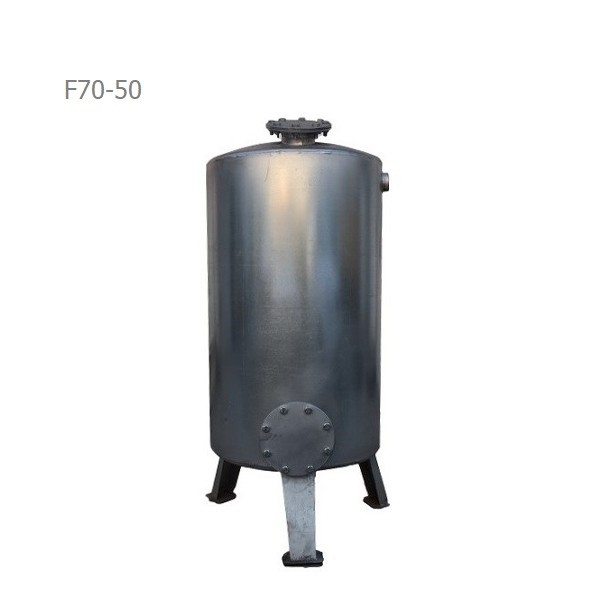
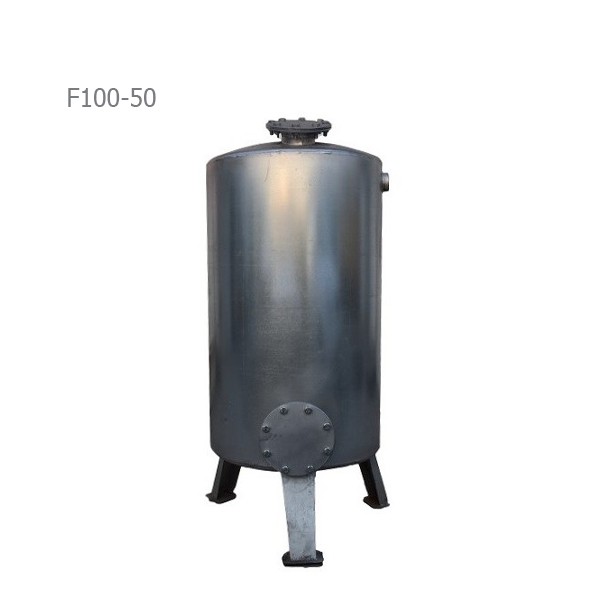
Vertical sand filters have a cylindrical tank mounted on a base. Vertical sand filters are suitable for environments such as engine rooms where space is limited.
The capacity and dimensions of the sand filter tank depend on the water circulation volume in the treatment system. However, the vertical galvanized sand filter is usually smaller than the horizontal sand filter.
| Table of Vertical Pressure Sand Filter Types | ||||||
| Amount of filtered water (m3/Hr) | weight of silica (kg) | Size of the Connection (inch) | The thickness of the sheet (mm) | Filter height (cm) | Filter Diameter (cm) | Model |
| 4 | 400 | 1/4 1 | 4 | 90 | 60 | DT.GP-10 |
| 8 | 700 | 2 | 5 | 150 | 80 | DT.GP-40 |
| 12 | 1200 | 2 | 6 | 150 | 100 | DT.GP-70 |
| 90 | 4500 | 4 | 10 | 150 | 200 | DT.GP-100 |
Pool Sand Filter Size Calculation
Calculating the volume of the sand filter for pool water filtration is very simple. The calculation of the sand filter is based on the use of the pool (private, public, competitions, etc.), the type of pool cover (open or covered pool), the pollution load of the pool (the number of swimmers per day) and the hours of operation of the pool.
The calculation of the sand filter for the swimming pool and hot tub is similar to each other. Only when selecting the filter should you pay attention to the working temperature of each filter because usually, the temperature of the hot tub water is around 40 to 45 degrees Celsius, which, taking into account the fluctuations or the possibility of failure of the temperature control system, it is possible to increase this temperature.
The first step to calculating the sand filter is to calculate the water volume of your pool or hot tub. If the swimming pool and hot tub are rectangular, it is enough to multiply the length, width, and average depth in meters to get the pool volume in cubic meters.
- L: Length
- W: Width
- R: Diameter
- A.D.: Average Depth { (Minimum Depth + Maximum Depth) / 2}
Note: The unit of all sizes is in meters, and the volume obtained is in cubic meters.
Pool Sand Filter Water Flow Calculation
To calculate the filtration rate of a sand filter, the water circulation rate must be calculated. The following table will guide you on that task.
| Swimming Pool Types |
Time |
|
Hydrotherapy swimming pool |
0.5-1 Hr |
|
Training pool |
1-2 Hr |
|
Relaxation pool with a depth of less than 1 meter |
1-2 Hr |
|
Relaxation pool with a minimum depth of 1 meter and a maximum depth of 1 meter |
2-2.5 Hr |
|
Standard public swimming pool with a length of up to 25 meters and a minimum depth of 1 meter |
3-4 Hr |
|
Competition pool with a length of up to 50 metres and a minimum depth of 2 metres |
4-5 Hr |
|
Private swimming pool |
4-6 Hr |
|
Diving pool |
4-6 Hr |
|
Public swimming pool with a low number of swimmers |
6-8 Hr |
|
Public swimming pool with a high number of swimmers |
4-6 Hr |
|
Hot Tub, both private and public |
10-30 Minutes |
The water circulation rate is actually the amount of time required for one circulation of the entire pool water volume in the filtration system. However, this does not mean that after the calculated time, all the pool water has been passed through the sand filter.
Still, on average, nearly 60% of the total water (according to the test) has been purified, and the quality is proportional to that. However, after about 7 or 8 times water circulation, it can be said that all of the water has been passed through the sand filter of the pool at least once.
By dividing the total volume of pool water by the flow rate, the filtration rate of the filter can be obtained. This calculation of the filtration capacity of the sand filter is provided in most of the product catalogs.
But to calculate the sand filter more accurately, or if you don't have the table and catalog of the manufacturer, the diameter of the sand filter can be calculated from the following equation.
To obtain the diameter of the rapid sand filter, we consider a flow rate of 1.5-5 GPM per square foot of the surface of the rapid sand filter, and for the fiberglass sand filter, 15-20 GPM/f2.
Note: In calculating the sand filter, the height of the filter is equal to 1 to 1.2 of the diameter of the filter.
Pool Filter Buying Tips and Points
To choose the right type and capacity of Water turnover rate for each pool, the most important point is the amount of water in the pool or hot tub; the pool filter must be selected in such a way that it can filter the entire volume of pool water within a period of 6 to 8 hours.
Before choosing a pool filter, find out about the maximum working pressure that the desired pool water filter can tolerate; the working pressure in pool filters is different according to their model, structure, and brand.
Note that the recommended time for each complete purification of water in outdoor pools is less than 6 hours, and for indoor pools, a maximum of 8 hours. The method of calculating the pool filter is somewhat different based on the type of filter (sand, cartridge, diatomaceous earth) as described above.
One of the most important points in this review, in addition to the capacity and the water filtration ratio, is the proportionality of the head and flow rate of the purification pump, as well as the pressure drop of the water flow passing through the pool filter, which depends on the type of filter. The amount of sand in the sand filters has a direct effect on the pressure drop of the water flow in the filter.
A "five or six level" valve is on the body of the sand filters and diatomaceous earth filters, along with the description for each model. And it helps to improve the operation of these filters.
Note: Before changing the valve mode, it is crucial to turn off the pump. Otherwise, the multi-stage valve will be damaged and will void the guarantee.
Also, before ordering the desired pool and hut tub filter, pay attention to its dimensions and size so that it can pass through the hatch or the door of the engine room or if it can be installed in the location of the engine room.
Pool Filter Experts' Review
In general, pool, jacuzzi, hot tub, and spa filters are divided into three types: sand filters, cartridge filters, and diatomaceous earth filters. Water passing through the filters is the first stage of improving the quality of water.
Considering the advantages and disadvantages of pool filters, we find the following points:
- Sand filters have different types (metal and fiberglass - FRP) and capacities. They are used for the physical filtration of pools, jacuzzis, hot tubs, and spa water, and are usually made in small capacities mostly used in small or indoor pools. They are able to absorb large particles and provide clear water.
- Cartridge filters are generally used in spas and are highly efficient and effective.
- Diatomaceous earth filters are one of the most effective ways in the field of water filtration and can filter the smallest particles and impurities in the shortest time and are mostly used in large pools.
Best Pool Filter Brands
The best pool filter brands in terms of quality and customer satisfaction are:
- EMAUX
- Hiwater
- Megapool
- Aqua Atlas
- Pinar
- Araz Sanat
Buying Pool Filters
To choose and buy the right filter for your swimming pool or hot tub (in addition to the dimensions and size of the filter), pay attention to the amount of water in the swimming pool or hot tub.
The maximum working pressure that the filter can tolerate is somewhat different. Among other important things, it should be mentioned that the head and flow rate of the filtration pump are proportional, as well as the pressure drop of the water flow passing through the filter.
On the site of DamaTajhiz HVAC, technical information of dozens of models of pool and hot tub filters in various sizes and models from brands such as Emaux, Highwater, Hyper Pool, Hayward, DamaTajhiz, etc. (with their main guarantee) has been provided for you to enjoy the good feeling of optimal and smart shopping.
Also note that in the specialized HVAC group of Damatajhiz, all the pool and hot tub filters are only sold in bulk. Therefore, if you want to wholesale any of these products, feel free to contact us.
Pool Filter Price
The price of the swimming pool and hot tub filter is based on the dimensions, filtration capacity, and water level of the covered space in outdoor and indoor swimming pools. Considering all those factors is the right way to choose the best model among dozens on the website of DamaTajhiz, according to your needs and budget.
It should be noted that the prices of all swimming pool and hot tub filters presented on the website of DamaTajhiz HVAC are up to date and guaranteed, as well as the discounts, which are already included for wholesale purchase.
Factors Affecting Jacuzzi Bathtub Prices
Before selecting and purchasing a jacuzzi bathtub, understanding the factors that influence its price helps ensure a smart choice aligned with your needs and budget. These factors mainly include material, body construction, dimensions, features and options, brand, and installation-related costs.
Body Material and Build Quality
Jacuzzi bathtubs made of reinforced acrylic, fibreglass, or durable stainless-steel offer longer service life and better resistance to moisture and temperature, which directly affects the price.
Features and Accessories
Options such as hydrotherapy pumps, air and water jets, LED lighting, digital controls, music systems, and water heaters increase the overall price of a jacuzzi bathtub.
Size and Capacity
Larger and deeper jacuzzi bathtubs require more materials and involve more complex installation, resulting in higher costs.
Brand and After-Sales Service
Reputable brands provide higher quality, reliable warranties, and after-sales support, increasing the overall value of the purchase.
Installation and Maintenance Expenses
Some models require additional equipment and professional servicing, which should be considered when planning the budget for a jacuzzi bathtub.
Dear Users,
While thanking you for your confidence in the technical opinions of DamaTajhiz sales experts, it should be noted that the buyer ultimately determines the selection of the desired product brand based on history, brand strength, service, and price.
However, in the field of swimming pool filters, most users and buyers prefer best-selling brands such as Emaux, Hayward, Hyperpool, Aquamarine, etc., due to their quality, price, and after-sales service.
If, after reading the above information, you still have questions about buying different types of sand, diatomaceous earth, and cartridge pool and spa filters, you can contact the pool equipment sales experts on extension 103-105-106 and the main number is +98 21 88341854. Get advice and ask your questions about saunas and spas.
As the specialist group of DamaTajhiz HVAC Group provides all types of pool and spa filters in the Middle East region. If you need a pool and spa filter for any of the countries in the region, you can place your order with confidence, a product guarantee, and a reasonable price. Leave it to our sales experts.
"Knowledge Fuels Better Choices"

Registered Trademark and Stewardship Business Licenses Issued by the Union of Virtual Business Association and the HVAC Equipment Industry.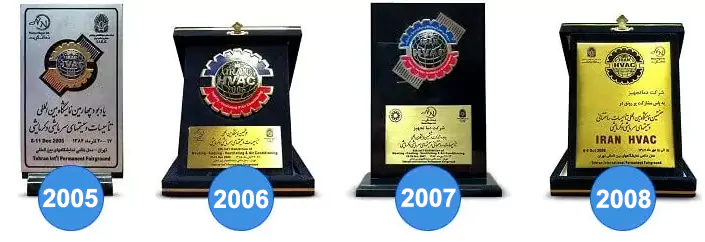
DamaTajhiz HVAC Participation at International HVAC and Construction Facilities Exhibitions Demonstrates its Global Reach and Commitment to the Industry.

We Look Forward to Your Call and the Opportunity to Meet With You
SHARE THIS CONTENT TO SPREAD THE KNOWLEDGE
 |
 |
 |
 |
 |


Head Office: No. 463,Talebian Alley,Taleghani St.Tehran,Iran

DamaTajhiz has provided the opportunity to sell and ship specialized HVAC equipment for applicants in the following countries as the first and the most popular online store for selling HVAC equipment (Heating , Ventilation , Cooling , Air conditioning) in the Middle East : Afghanistan – Tajikistan - Uzbekistan – Turkmenistan – Azerbaijan – Armenia – Georgia – Turkey – Iraq – Syria – Jordan – Kuwait – Emirates – Qatar – Oman.


