Menu
لوگو دماتجهیز

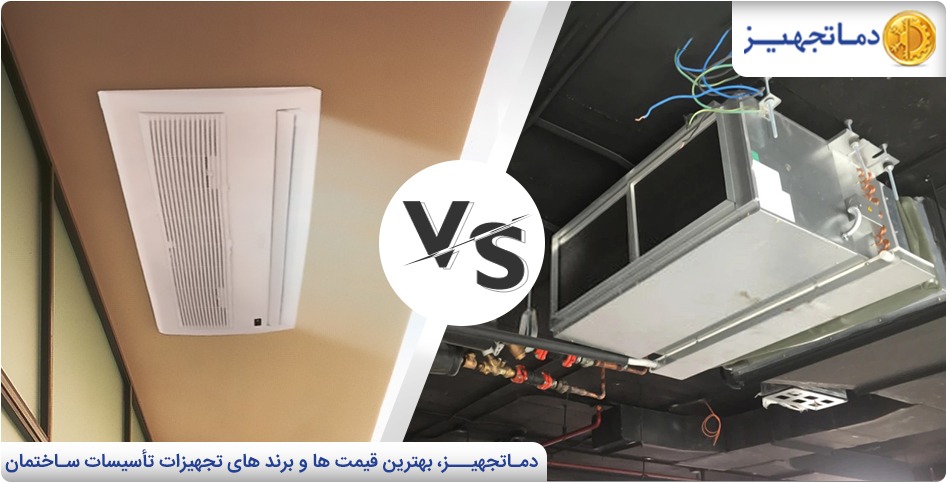
Zent vs. Air Washer

The Air Washer and Zent are both useful and popular cooling and ventilation devices in HVAC systems. If you're trying to choose between them, it's important to compare them properly. So, let’s take a closer look at the full and detailed comparison between the Zent and the Air Washer.

Last Updated Date
19 July 2025

Nowadays, a wide range of heating and cooling equipment is used to meet the climate control needs of homes, workshops, and halls. There are so many types, models, and brands available, making the right choice overwhelming. Considering factors like the area, installation method, usage, initial cost, and long-term operating expenses is essential.
This article compares two of the most practical HVAC systems: Zent and Air Washer. Let’s dive in.

Comparison of Zent and Airwasher

What Is Zent?

Zent is a dual-purpose HVAC system unit that not only provides cool or warm air but also increases humidity levels. The name "Zent" comes from the concept of semi-winter and semi-summer operation. It’s an Iranian-designed system, and unlike traditional evaporative coolers or Air Washers, the Zent System is installed indoors, ideally near a window to allow fresh air intake during summer.
The unit is slightly larger than a standard evaporative cooler, and it has distinct methods for heating and cooling. Because the Zent System cools using moisture (like cellulose-based swamp coolers), it works best in areas where the relative humidity is below 40% during summer.


zent vs. air washer

How Does a Zent Work?

A Zent can operate in both cooling (with humidification) and heating modes. In summer, it functions much like an evaporative cooler. Water is pumped over pads or cellulose sheets, and as fresh air passes through, the water evaporates, and cools the air. Despite being larger than a typical air cooler, the Zent System must be installed indoors since it's also used for heating in winter, but there must be a window nearby for fresh air intake, especially in warmer months of the year.
In winter, the system pulls in indoor air and passes it over hot-water coils, delivering warm, pleasant air back into the space. Warm water is circulated from a boiler or heating package to the Zent coils. A centrifugal fan then blows air across these coils, distributing the heated air throughout all rooms via ceiling ducts.

Components of a Zent System

The Zent System is a climate control unit that can both heat and cool indoor spaces. It’s made up of several key components, each playing a crucial role in the system’s overall performance. Below are the main parts of a typical zent System:

  • Body (outer casing)
  • Water tray
  • Air-blowing fan
  • Electric motor
  • Water pump
  • Hot-water coil
  • Fresh air intake vent (located outside the building)
  • Air outlet vent (for distributing cold or warm air) with cellulose cooling pads

Advantages of Zent Systems

Here are some of the main advantages and performance highlights of Zent Systems:

  • Being Cost-effective (since it provides both heating and cooling)
  • Energy Efficiency (because it doesn't use a compressor)
  • Low Initial Costs
  • Hassle-Free Installation

What Is an Air Washer?

An Air Washer is a cooling system that uses high-pressure water spray to cool and clean the air passing through it. Unlike evaporative coolers, Air Washers do not use pads or cellulose filters. They can function as standalone units or be integrated into air handling units (AHUs) and other HVAC systems.

air washer vs. sent

Types of Air Washers

Air Washers come in both residential and industrial models and come in various configurations, like horizontal, vertical, front-discharge, or top-discharge.
Residential Air Washers work similarly to industrial ones, but on a smaller scale. That’s why the apartment-sized Air Washer is often referred to as a home Air Washer.
However, both Zent Systems and Air Washers require 100% fresh outdoor air intake for effective cooling in summer, and like evaporative coolers, they are not suitable for humid regions where summer humidity is more than 40%.

How Does an Air Washer Work?

In summer, the warm outdoor air is pulled into the Air Washer by a fan. Then, a high-pressure pump sprays a fine mist of water through nozzles, which collides with the air, removing dust and pollutants. The result is clean, cool air that exits the system.
The heat exchange between water droplets and warm air, along with air washing, leads to a noticeable drop in air temperature at the outlet.

Main Components of an Air Washer

Air Washers can work as standalone systems or be part of a central HVAC system. They typically include:

  • Outer casing (Body)
  • Electric motor
  • Airflow fan
  • Air filters
  • Fine mist spray nozzles
  • High-pressure water pump
  • Bottom water basin
  • Air diffuser
  • Hot water coil (usually two-row, 8 fins per inch, with calculated heat exchange surface)
  • Droplet separator blades

Air Washer Advantages

Here are the main advantages of Air Washers:

Low Initial Cost

Since they don’t include a compressor, refrigerant, or condenser, Air Washers are much cheaper than traditional cooling systems like chillers or AHUs.

Energy Efficiency

Electricity is only used for running the fan and water pump, so energy consumption is minimal.

Low Noise Levels

Air Washers are much quieter than conventional HVAC systems that rely on compressors. The only audible sound comes from the fan, which can be reduced by using low-noise fan models.

Easy and Inexpensive Maintenance

Components are relatively simple, and the Key Differences Between the Zent System and the Air Washer
In this section, we’ll compare the applications and performance of the Zent System and the Air Washer, highlighting the key differences between the two systems.

Differences Between Zent and Air Washer

In this section, we will compare the Zent System and the Air Washer in terms of their applications and performance, and highlight the key differences between them.

Zent and Air Washer Application Comparison

The Zent System is commonly used in residential apartments, office buildings, and schools, while the Air Washer is mostly used in large halls and industrial settings like factories, gyms, greenhouses, poultry farms, and exhibition spaces.
It's important to note that neither the Zent System nor the Air Washer is suitable for high-traffic venues like banquet halls, as humid air doesn’t offer sufficient cooling in crowded environments.
Additionally, because both systems rely on evaporative cooling, they are not effective in humid or coastal climates.
However, the Zent System is a suitable option for offices, schools, mosques, and buildings in regions where the relative humidity during summer is below 40%.

Air Washer vs. Zent: Performance Comparison

While the Zent System and the Air Washer have some similarities in how they operate, there are key differences between them.

Differences Between Zent and Air Washer Mechanism

The main difference lies in how each system exchanges heat between air and water.

  • The Zent System uses cellulose cooling pads placed in the path of incoming air. Water flows over these pads, reducing the temperature of the air as it passes through.
  • In contrast, the Air Washer uses high-pressure spray nozzles to atomize water, which mixes directly with the air. The cooling happens through this fine mist interacting with the passing air.

In terms of size and capacity:

  • The Zent System is generally designed for smaller spaces up to 400 square meters, and its dimensions are relatively compact.
  • The Air Washer, on the other hand, is available in much larger sizes and capacities, making it ideal for large halls with high ceilings and industrial-scale ventilation needs.

Common Features of Zent and Air Washer

Despite their differences, the Zent System and the Air Washer share several similarities:

  • Both systems require fresh outdoor air to operate efficiently in summer.
  • Since they produce humidified air, they cannot reuse indoor return air for cooling.
  • Both use evaporative cooling principles, which means their performance is directly affected by ambient humidity.
  • affordable. Repairs and replacements are cost-effective.

Conclusion: Comparing the Zent System and the Air Washer

The first step in choosing between a Zent System and an Air Washer is to consider the cooling/heating capacity and the installation space. These two systems come in various models and sizes, each offering different airflow and thermal capacities. Before purchasing, it's important to assess the climate conditions, space size, and type of usage to make the right decision.
After that, factors such as energy consumption, technical features, brand reputation, and system advantages should also be carefully reviewed.
You can explore and compare a wide range of Zent and Air Washer models on the DamaTajhiz website, and pick the one that best fits your space and installation needs.

Comparison Table of Zent vs. Air Washer
Comparison Item Zent System Air Washer
Applications Residential apartments, offices, schools, mosques Large halls, factories, gyms, greenhouses, poultry farms, and exhibitions
Usage Limitation Not suitable for banquet halls Not suitable for banquet halls
Climate Limitation Effective in areas with summer humidity below 40% Ineffective in humid or coastal climates
Working Mechanism Uses cellulose pads with water flow Sprays fine mist via high-pressure nozzles
Size & Capacity Up to 400 m²; compact Larger size, industrial-grade
Fresh Air Requirement Yes, in summer Yes, in summer
Reuse of Return Air Not possible Not possible
Cooling Type Evaporative Evaporative
Humidity Impact Performance is affected by ambient humidity Performance is affected by ambient humidity
Maintenance Costs Affordable Affordable

The Final Note

DamaTajhiz professional group, a leading expert in building HVAC systems since 2004 (1383), and holder of three valid business licenses, offers a wide selection of Zent Systems, Air Washers, and hundreds of other HVAC products. All products, such as Damatajhiz Zent, come with an originality guarantee, after-sales support, official warranties, and fair pricing.
For more information or to speak with a specialist, feel free to call +9821-88822550.

contact damatajhiz

We look forward to hearing from you and welcoming you to the DamaTajhiz specialized center

By sharing the above article on social networks, let your friends know about its valuable content

Related Tags

Comparison of Zent and Airwasher
Without Comment
توضیحات ارسال به سراسر کشور
Fast shipping nationwide
راهنمای Installment purchase
Secure payment
شرایط ضمانت بازگشت کالا
Valid warranty
شرایط After-sales service محصولات
After-sales service
Address

Head Office: No. 463,Talebian Alley,Taleghani St.Tehran,Iran

لوگو شرکت دماتجهیز
گواهینامه های شرکت دماتجهیز

DamaTajhiz has provided the opportunity to sell and ship specialized HVAC equipment for applicants in the following countries as the first and the most popular online store for selling HVAC equipment (Heating , Ventilation , Cooling , Air conditioning) in the Middle East : Afghanistan – Tajikistan - Uzbekistan – Turkmenistan – Azerbaijan – Armenia – Georgia – Turkey – Iraq – Syria – Jordan – Kuwait – Emirates – Qatar – Oman.

Social Media:
واتساپ دماتجهیزآپارات دماتجهیزلینکدین دماتجهیزیوتیوب دماتجهیزاینستاگرام دماتجهیز
© 2000-2025, All Rights Reserved
Damatajhiz WhatsApp