Swimming pools are among the most popular recreational and sports venues, where swimming offers numerous benefits for both physical and mental health. As a result, swimming pools from small to large are built in residential buildings, hotels, recreation centers, private villas, and the like for private and public use. In the meantime, paying attention to health, safety, and even comfort in swimming pools is an important matter, neglecting which endangers the health of swimmers. In this article, which is a comprehensive guide to pool equipment, we will introduce essential equipment for the safety of swimmers in the pool.
Essential Equipment for Swimming Pools
In general, the supplies and equipment needed for the construction and maintenance of swimming pools include a wide range of types of equipment. Pool water purification and disinfection devices, such as filtration filters, types of chlorine, pool sweepers, antibacterial UV systems, ozone generators, and even pool water heating systems, are among the most important categories of pool equipment that are produced and supplied in different types.
Pumps, as equipment for supplying pressure and water circulation in the system, are another important category of equipment needed in the pool, which is produced by reputable Iranian and international companies. Also, swimming pools need different equipment for heating, which is available in different brands and capacities.
Review, Selection, and Pricing of HVAC Equipment
Pool Water Filter
Filtration or purification of pool water is a physical process during which polluting particles and impurities in water are separated from it. In general, swimming pool water filters are produced in the following three types:
Diatom Filter for Pool Water
Compared to other types of pool filters, diatom filters are highly efficient and can absorb particles between 10 and 20 microns. A special soil called diatomaceous earth is used in diatomaceous filters, and the amount of this soil varies depending on the capacity of the filter. Diatomaceous earth is a type of fossilized remains of microscopic sea plants with a siliceous shell, and it is considered a super filter and chemically neutral.
In diatom filters, diatomaceous earth is not poured directly into the pool filter, but it is installed inside the pool filtration pump using a strainer. Also, a higher-than-normal pressure on the diatom filter gauge indicates that the filter needs to be washed or backwashed. On the other hand, after each washing of the diatom filter, the filter must be recharged with diatomaceous earth.

Pool water Sand Filter
The sand filter is one of the other types of physical pool water filters, which has a heavier weight than other types. The use of granulated silica for water purification in this type of filter has caused it to have a lot of weight.
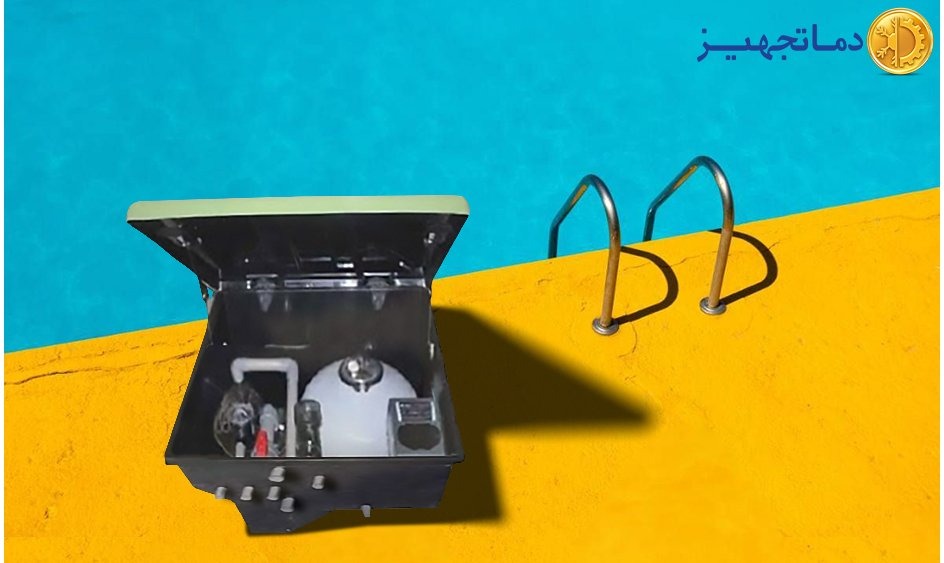
Pool water purification sand filters are made with tanks of different materials, such as metal, fiberglass, and composite. Of course, sand filters with a metal tank are produced in huge volumes and can withstand high pressures.
Swimming Pool Cartridge Filter
Pool cartridge filters are suitable for pools where the water does not circulate much, and there is no need for strong filtration. As a result, these types of filters are suitable for small swimming pools in homes and medical centers and are not used in large swimming pools.
One of the important advantages of pool filter cartridges is to use they can be used on a manual pool sweeper cart with up to 2HP motor power. Using this cartridge on a manual sweeper cart prevents water from overflowing and purifies the pool water at the same time as sweeping, returning clean water to the pool.

Pool Filtration Pumps
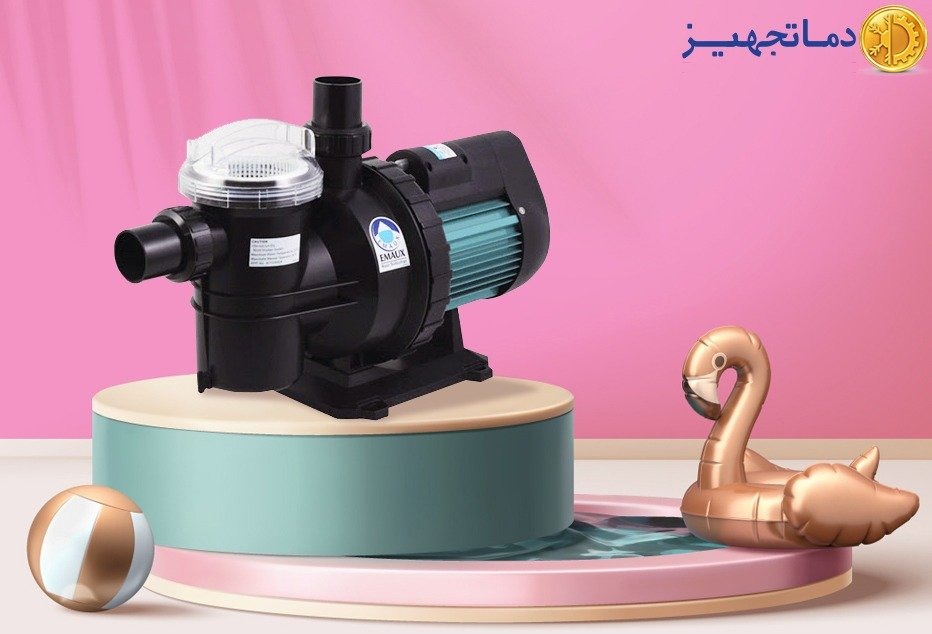
Pool water purification pumps, also known as pool pumps, suck water from the pool bowl, pass it through filters and other disinfection equipment, and return the water to the pool bowl.
The pool water treatment pump is selected based on the accurate calculation of two parameters, head (pressure) and flow rate (volume) required in each pool, and of course, to calculate the head and flow rate of the pool pump, two factors, pressure drop and volume of passing water, must be taken into account. On the other hand, a strainer made of cast iron or compressed plastic (bakelite) must be placed before the inlet of each pool water purification pump to remove leaves, hair, and other physical contaminants from the water circulating in the system. These particles and physical pollution cause the pump to malfunction and be damaged.
Dehumidifier for Swimming Pools
The dehumidifier is used to absorb and remove unwanted moisture in any place or product production process. As you know, indoor swimming pools are humid environments where all kinds of bacteria and skin fungi can grow and multiply, so pool dehumidifiers must be used to remove or adjust the humidity in them.
Pool dehumidifiers are produced and supplied in different capacities with or without heating coils. In general, air humidity is removed in one of the following three ways in indoor swimming pools and other environments:
- Removing moisture using moisture-absorbent salts
- Removing moisture using cold surfaces (mechanical and thermodynamic dehumidification systems)
- Removing moisture using air ionization (electric dehumidifier)

Pool Vacuum
The pool sweeper is one of the important equipment for keeping the water and the bowl (body) of the pool clean, and it is used to collect and clean the materials deposited in the water and even the body of the pool. On the other hand, the pool sweeper prevents the formation of algae on the walls and floor of the pool and the settling of any type of pollution. Pool sweepers are mainly produced and supplied in the following three main models:
Manual Pool Vacuum
The manual swimming pool sweeper is made to order and according to the buyer's needs in terms of pump power and hose length, in two models, without a pool filter and with a filter.
In the pool sweeper without an open circuit filter, the water drawn by the sweeper is not directly returned to the pool, but this water enters the skimmer and returns to the pool after the filter circuit. If there is no skimmer and pool purification system, the water is diverted to the garden, etc.
In a manual pool sweeper with a closed-circuit filtration filter, the water drawn from the pool is fed into the sweeper filter by a pump and returned to the pool after physical purification.
Semi-Automatic Pool Sweeper
The semi-automatic sweeper is placed on the bottom of the pool after being connected to the pool treatment pump or pool skimmer so that the sweeper moves dynamically to all points using the pump and its suction power. Next, the broom starts to collect all suspended particles in the water and pool pollution from the bottom.
Automatic Pool Vacuum (Robotic Sweeper)
The robotic pool sweeper has a strong motor (pump) with a light and portable body that moves automatically on vertical and horizontal surfaces on the floor and walls of the pool. The robotic pool sweeper performs physical cleaning operations on all surfaces of the body and floor of the pool without the need for an operator.
Also, robotic pool sweepers, after sucking water from the floor and wall of the pool into the sweeper, physically purify it through internal cartridge filters, and after passing the water through the filter, they re-enter it into the pool, thus completely avoiding water wastage.
Pool Water Sanitizing Equipment
One of the important and necessary conditions for using swimming pools is to have clean and clear water. When the chemical properties of water are within the standard range and in a balanced state, the pool water will be very clear and free of unpleasant odors. Water is a solvent that more or less dissolves organic and inorganic substances in itself, and water that is chemically in balance is neither corrosive (acidic) nor produces sediment. Pool water disinfection equipment is divided into the following three general categories:
Chlorine Diffuser
Chlorine is added to water in various forms, such as powder, tablets, liquid, or gas, then it reacts with hydrogen and oxygen molecules and forms two substances called hypochloric acid and hydrochloric acid. These two substances, due to their disinfection properties, lead to the destruction of bacteria and harmful microorganisms in the pool water.
Ozone Sanitizing
Ozone is an extremely suitable substance for disinfecting pool water, which does not have the biological effects of chlorine, such as eye irritation and respiratory problems. As a result, various types of ozone devices with different capacities are produced and supplied to disinfect swimming pools. Of course, ozone is not usually used as the only disinfectant in the pool, but chlorine is also used as a supplement.

UV Lamp for Sanitizing Pool Water
Using an ultraviolet ray or UV lamp is another way to disinfect pool water; In this method, the pool water is exposed to ultraviolet rays and disinfected by passing through the closed chamber of the lamp. The use of the UV lamp depends on the circulation of the pool water so that the disinfection operation is carried out well.
Pool Air Conditioning Systems
In general, the supply of fresh and clean air is very important for the comfortable breathing of swimmers inside indoor pools. As a result, various types of air conditioning systems are installed in indoor swimming pools to regulate and balance air humidity and ventilation. Of course, creating proper ventilation in swimming pools will vary according to the model of the device and how it works, and the following considerations should be taken into account when designing an air conditioning system for swimming pools:
- Humidity control inside the hall
- Air heating of the pool hall
- Determining the air conditioning rate of the swimming pool to ensure the proper quality of the indoor air
- How to distribute air inside the swimming pool hall
- Channel design and the location of air distribution valves
DamaTajhiz: the First Specialized Reference for Selecting and Pricing HVAC Systems (Since 2004)
Pool Heating System
Ensuring the comfort of swimmers and maintaining their health in indoor swimming pools requires keeping the pool temperature in a suitable range. Based on studies, the ideal temperature for pool water is 27 to 29 degrees Celsius, and the following types of heating equipment are used to reach the desired temperature in pools:
Pool Heating Packages
One of the most widely used equipment for heating pools up to 90 cubic meters is gas and electric pool heating packages, which are capable of heating pool water, jacuzzi, radiators, and hot water consumption without the need for an engine room and related piping up to the pool bowl. These packages are offered in different categories and allow the user to use the engine room systems separately.
The way the heating works in these packages is that when the pool water passes through the pool package, the heat from the device's boiler, which is supplied by gas or electricity consumption, is transferred to the water; Therefore, with only one input and one output, the need for piping equipment and engine room pump is completely solved.
Pool Water Heating Using a Solar System
Solar pool water heaters also provide the necessary heat for pool water heating by converting solar radiant energy into heating energy.
Pool Heating with Boilers and Heat Exchangers
The process of heating the pool using a boiler and heat exchangers is that the water heated by the boiler, which flows into the heating system, enters the heat exchanger. Then the pool water also flows into the heat exchanger pipes, and by this, the heat exchange is done between the hot water of the mortuary and the cold water of the pool, and as a result, the pool water is heated.
Pool Water Fountain and Nozzle
Water fountains are among the attractive factors and equipment to create mental peace and air conditioning, which are also used in many swimming pools. All kinds of water fountains and fountains with different designs are produced and supplied by Iranian companies. Of course, to choose and buy pool fountains and fountains, you must pay attention to the selected space and pool size because fountains are produced and supplied in various sizes and models.

Dive and Pool Slide
All kinds of swimming pools and slides are a necessary types of equipment to create a fun and happy atmosphere in swimming pools. Dives and slides are installed in the smallest and simplest dimensions and models for children to play at the edge of the pool, and in larger and winding models for adults and children, they are installed and used in recreational pools.
In order to choose and buy a suitable swimming pool slide and dive, in addition to the dimensions and size that should fit the pool space, you should also pay attention to the capacity or volume of water inside the pool bowl.
Pool Equipment in Brief
On the site of Damatajhiz's specialized collection, technical information of dozens of models of all types of equipment required for swimming pools, saunas, and jacuzzis, from reputable brands with original warranty, has been presented for you to enjoy the good feeling of optimal and smart shopping. To check and choose the equipment you need for your swimming pool or hot tub, you can contact the experts of the pool, sauna, and hot tub equipment department in Damatajhiz during office hours.
"Knowledge Fuels Better Choices"
Registered Trademark and Stewardship Business Licenses Issued by the Union of Virtual Business Association and the HVAC Equipment Industry.
DamaTajhiz HVAC Participation at International HVAC and Construction Facilities Exhibitions Demonstrates its Global Reach and Commitment to the Industry.
We Look Forward to Your Call and the Opportunity to Meet With You
SHARE THIS CONTENT TO SPREAD THE KNOWLEDGE
| |