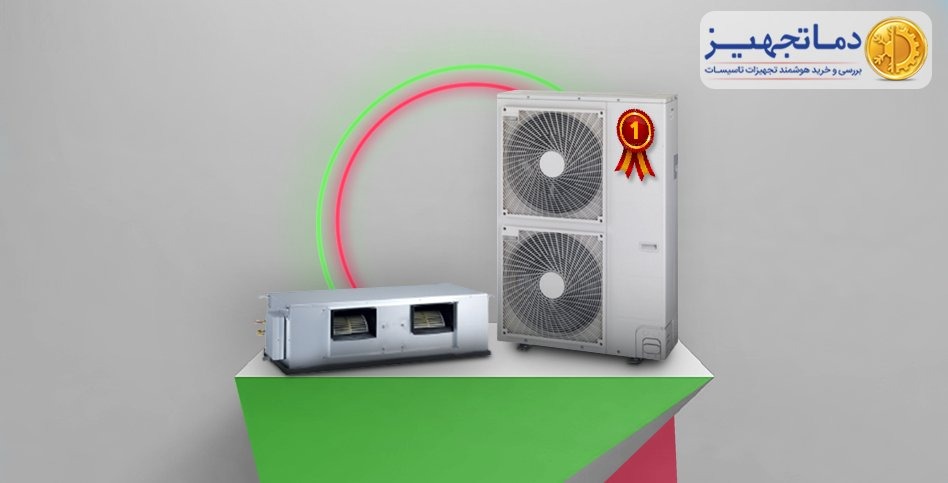
A ducted split system is a great example of the new generation of HVAC systems. It not only balances and creates a comfortable temperature but also, due to its modern design and compact installation, enhances the aesthetics and layout of any space. While its performance is similar to that of a standard split unit, it is installed above the false ceiling, with only a few elegant air vents visible in the room.
Currently, ducted splits are among the most popular HVAC options due to their even distribution of heating and cooling, humidity control, flexible vent installation on ceilings and walls, and more. In this article, titled Buying Guide for the Best Ducted Split System according to your needs. We explore how to calculate capacity, differences between regular and inverter models, top brands, usage, and benefits. Stay with us to learn more about key points regarding ducted split systems.

DamaTajhiz – The First Specialized Source for HVAC and Building Equipment Pricing and Selection (Since 2004)
Ducted Split Systems Applications
Ducted split systems are used for cooling and heating in residential apartments, offices, villas, etc. As a luxury option, they may consume electricity equal to or more than regular split AC units, depending on cooling/heating load calculations. These systems often replace multiple split units in one property. With ducted splits, each unit can have independent temperature control, and operational costs are lower than central systems like chillers.
Ducted splits come in capacities of 18,000 to 60,000 BTU and are available in single-phase or three-phase models in various sizes.
Regular vs. Inverter Ducted Split Systems
Ducted split systems are available in two types: regular and inverter. Regular ones have only ON/OFF operation at full power, with no speed adjustment. Inverter models, however, adjust compressor speed based on room temperature, which saves energy and extends the system’s lifespan by operating at partial capacities like 30%, 50%, etc.
Ducted Split Capacity Calculation before Buying
One of the key factors in choosing a ducted split system is its capacity. Based on factors like room size, area, and humidity level, we can determine the ideal capacity. For instance, if Tehran’s cooling coefficient is 400 and the space is 100 m², the required capacity would be: 400 * 100 = 40,000 BTU.
The table below shows an approximate correlation between area and capacity in moderate climates.
| Cooling Capacity | 18000 | 24000 | 30000 | 36000 | 42000 | 60000 |
|---|---|---|---|---|---|---|
| Residential Area (m²) | 30 to 40 | 40 to 55 | 50 to 70 | 60 to 80 | 70 to 90 | 90 to 125 |
| Office Area (m²) | 25 to 35 | 35 to 50 | 45 to 60 | 55 to 70 | 60 to 80 | 80 to 120 |
| Commercial Area (m²) | 20 to 30 | 30 to 40 | 40 to 50 | 50 to 60 | 60 to 70 | 70 to 110 |
Top Ducted Split Brands
Several companies produce ducted split systems, but the most popular in our country, based on quality, after-sales service, and pricing, are:
LG, Hisense, Green, G Plus, Iran Radiator, Damatajhiz, and more...
Top Factors to Choose the Best Ducted Split System
Consider the following before purchase:
• Inverter models start smoothly and save energy, recommended for 24,000 BTU and above.
• Send your latest building floor plans to Damatajhiz for accurate consultation.
• Check power requirements (single or three-phase), amperage, and panel size before purchase.
• Installation costs of air ducts and copper pipes vary, but roughly 20–30% of the initial system cost.
Important: Before purchasing a ducted split system, ensure that airflow capacity, power supply (single/three-phase), and internal unit dimensions, especially height, are suitable for your ceiling space.
If your unit area exceeds 120 m², use two ducted splits: one for the living room (off during sleep) and another for bedrooms (on during sleep). This reduces energy use, simplifies ducting, improves airflow, and minimizes noise.
Features of Ducted Split Systems
The advantages include:
-
Easy and affordable maintenance per unit
-
Simple operation and installation
-
Option to add air purification filters
-
Eliminates extensive piping in floors and ceilings
-
Horizontal installation in minimal ceiling space
-
Suitable for large and multi-use spaces
-
Dual function – cooling & heating (with hot water coil + package)
-
Humidity removal, air filtration, improved health
-
Long lifespan
-
Fresh air intake if needed with proper ducting
-
Eliminates need for chiller, cooling tower, central boiler room, and related piping
-
Removes vertical ductwork to preserve shared building spaces
-
Even air distribution through ceiling ducts
-
Independent control for each apartment, reducing service costs
-
Room temperature control via thermostat and adjustable vents, etc.
Ducted Split System Installation Tips
-
Proper ductwork and copper piping ensure maximum system efficiency.
-
To maintain fan balance and motor bearing life, install units horizontally and level.
-
For models without built-in thermostats in the return airflow path, install the thermostat at 140 cm height, away from direct sunlight or airflow.
-
If you skip return ducts, add under-door vents, or leave a 5 cm gap for airflow circulation.
-
Place return vents far from supply vents for efficient air circulation.
-
Install the unit only in enclosed spaces to prevent air mixing between units.
-
Use an oil trap every 6 meters of vertical copper piping.
Final Words about Buying the Best Ducted Split
DamaTajhiz Group (Iran’s first certified online store for HVAC systems since 2004 with three official licenses) offers a wide range of genuine ducted split systems and other products with warranty and competitive prices.